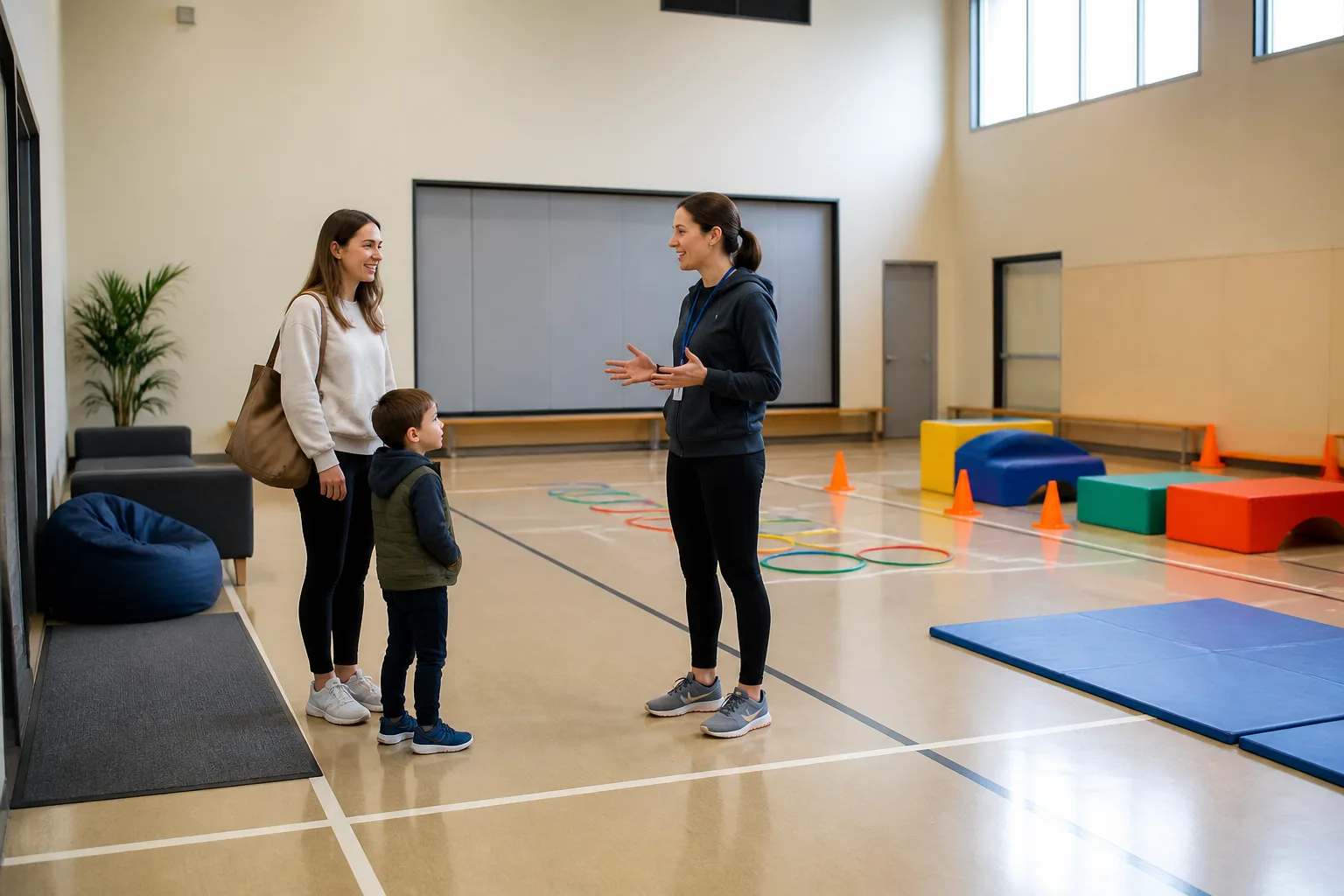
A sports programme works only if the child can reach the venue, participate in the lesson and use the necessary support around it. Having a step-free reception area is a good start, but it only covers the first part. Similarly, a beginner group addresses a child's experience level, not necessarily their disability or their need for specific support.
You should start by looking at the actual activity itself. Learning a ball skill on a flat floor, navigating a ninja circuit, or joining a team game all require different types of equipment, communication styles, and transitions. Instead of choosing a programme based on a generic activity label, try to describe exactly what participation would look like for your specific child.
Match the movement task to the child
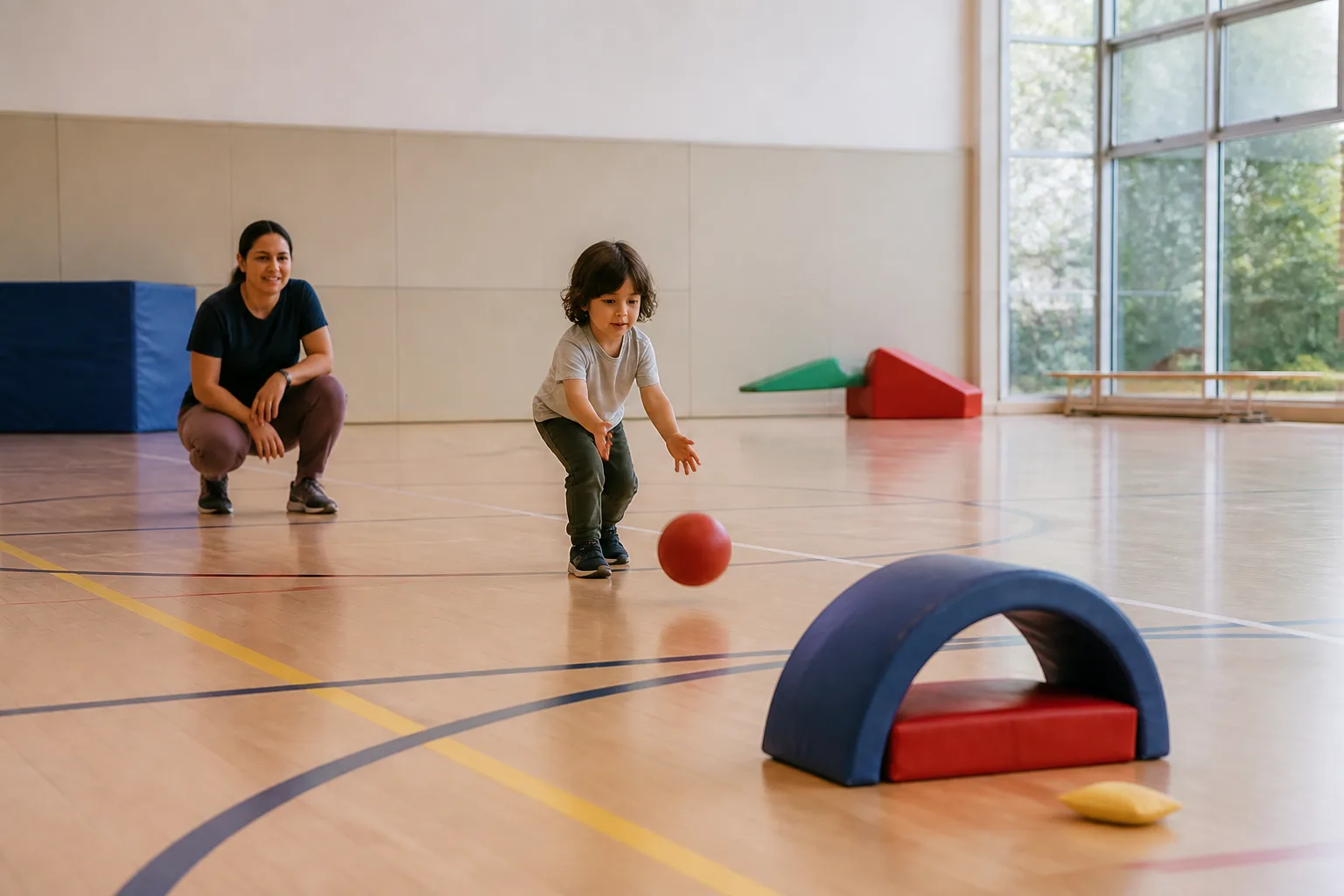
Try breaking down an advertised activity into its practical components. For a ball game, that might involve moving around a playing area, handling the ball, reacting to a signal, and changing direction. For a circuit, it might involve reaching each station, getting on and off equipment, and waiting safely between turns. Once you've broken it down, ask yourself which of these parts can be modified while the child still works toward the lesson's main goal.
Possible adaptations to discuss include performing a task while seated, using a different ball or target, following a shorter route, using visual instructions, receiving a demonstration before a turn, or having extra time between stations. These are things you should bring up in discussion, not features that are automatically guaranteed by every programme. You will need to ask the coach of a specific group which changes are actually possible given their equipment and staffing levels.
When comparing UBC Active Kids, Ninja X Academy, and My Gym Langley, compare them based on their specific programmes rather than assuming they are equivalent services. UBC offers various physical-activity programmes in Vancouver, Ninja X teaches ninja and parkour in Richmond, and My Gym Langley is a movement provider for children. Always confirm the current age group, venue, and format for each. These details are a starting point for your enquiry, not a confirmed list of accommodations.
Follow the route onto the activity floor
You need to check the entire route, from the arrival point through the reception and changing rooms to the actual lesson floor. A school gym might be accessed via a side entrance that is quite different from the main office. A room in a recreation centre might be on a different floor entirely. Make sure you know which entrance is open during the lesson time and if you'll need a lift.
Ask where a mobility aid can stay during the activity and how the child can get to a break area. If the child needs physical assistance or transfers, clarify who is trained and authorized to help. A spectator bench is not the same thing as having actual access to the activity. If you are worried about clearance, ask the venue to walk the specific route using the child's actual equipment.
Separate coaching from individual support
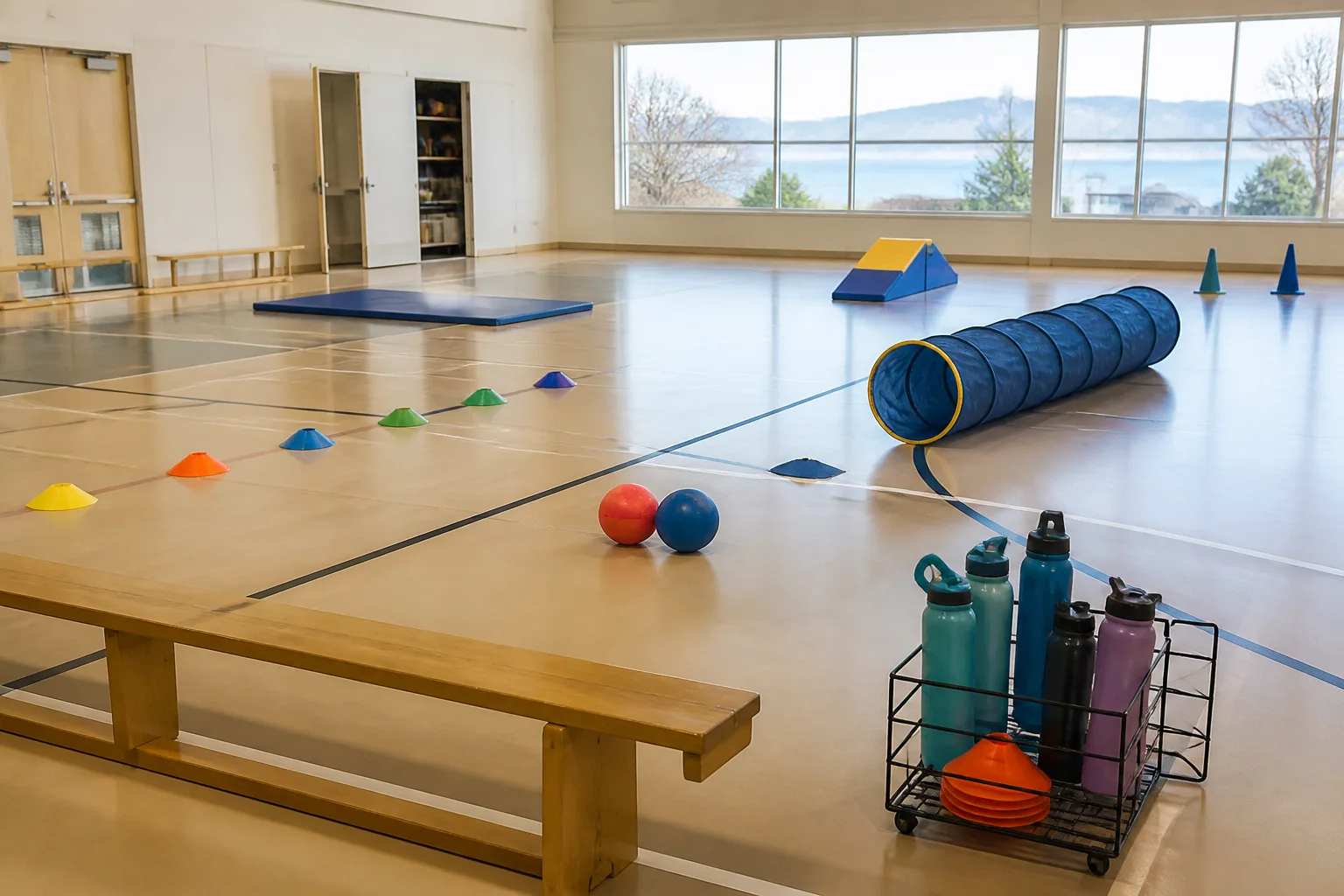
A coach who adapts an exercise is doing a different job than a support person providing one-to-one assistance. You need to agree on who is responsible for instructions, moving between stations, toileting, breaks, and any other assistance the child needs. Do not assume that being in a small group means an individual support worker is provided.
Ask if a parent or support person is allowed on the floor, if you need to register them separately, and what happens if a substitute coach takes over. It is helpful to explain routines in functional terms: for example, "the child follows one direction at a time," "they need a visual preview of a transition," or "they use a specific signal for a break." Only share the private information that is necessary to make these arrangements work.
If a general sports group cannot meet the required support needs, look for a programme specifically designed for adaptation. Flicka Gymnastics Club in North Vancouver advertises an autism-friendly class for fall 2026. this is a gymnastics option, not a substitute for every sport, and you will still need to confirm the staffing, eligibility, and specific adaptations. Our gymnastics access guide can help you learn how to evaluate these types of lessons.
Test communication, sound and transitions
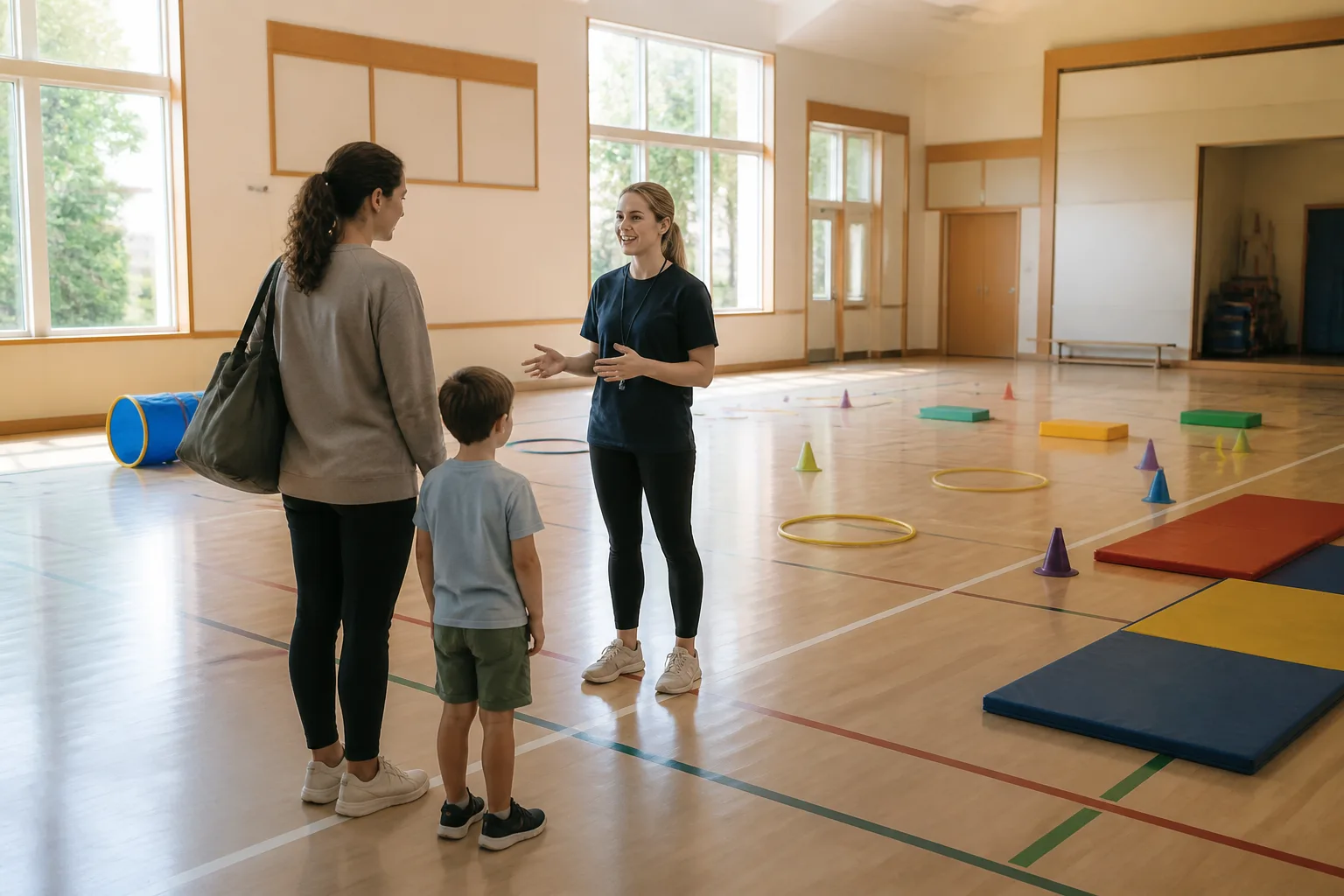
Ask if other groups share the floor and if the session uses things like whistles, shouted cues, or loud music. Figure out how children are notified when it is their turn, when an activity is ending, or when the group is moving to a new area. A visual signal might work for one child, while another might need a physical demonstration or extra time to process instructions.
You should plan the break before the lesson begins. Decide where the child can go, which adult is responsible for them, and how they can rejoin the group without having to cross an active game or obstacle. An introductory session or observation is very useful, provided it happens in the same room, with the same staffing and group arrangement as a normal class. A quiet, private tour won't show you how the environment changes when every single station is being used.
Confirm a workable participation plan
Before you register, you should have an agreement on the specific group, the adaptations, which adults are responsible, how breaks will work, and who to contact if changes are needed. Ask the venue what happens if the agreed-upon support isn't available on a particular day. Once things are running, review the plan after a few regular sessions with both the child and the coach, especially if the equipment or activities change.
You can use the activity directory to compare different programmes nearby and the areas page to plan the travel for recurring sessions. The goal is to end up with a clear understanding of how the child will learn, move, communicate, and take breaks during the lesson, rather than just a general promise that the programme is inclusive.