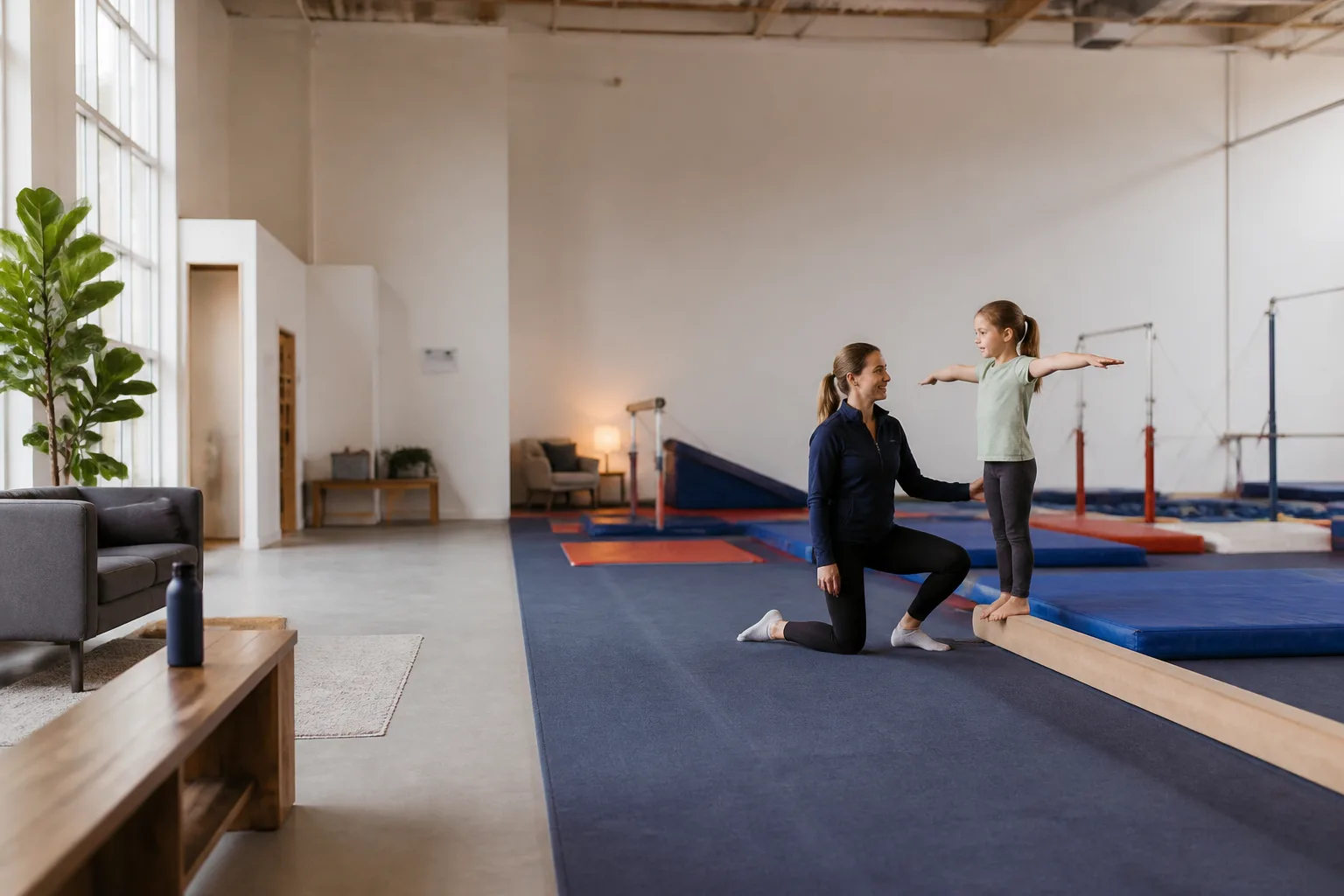
“All levels” does not explain whether a particular class can support this child. It doesn't actually tell you if a specific class can actually support your child. Accessibility is about more than just a ramp at the entrance or a wide washroom. It includes things like noise levels, waiting times, how transitions work, how much physical help is available, and how an instructor adapts a specific station. Instead of asking if a club is "accessible" in a general sense, try describing what specifically helps your child participate, then ask about the specific class you want them to join.
Separate three different questions
Can the child enter and use the facility?
You need to know the logistics of getting in and out. Ask about the route from the parking lot or transit stop to the reception area. Are there stairs or heavy doors? Look into the changing area and the specific washroom your child will use. If your child uses mobility equipment, don't just take a "yes" for "accessible" as an answer. Arrange a walk-through of the route your child would use. If a doorway, transfer space, or piece of equipment may be a barrier, explain the clearance or assistance needed and have the club check that specific point. You should also find out exactly where the class happens inside the gym and if spectators or support people can actually reach the area.
Can the child take part in the lesson?
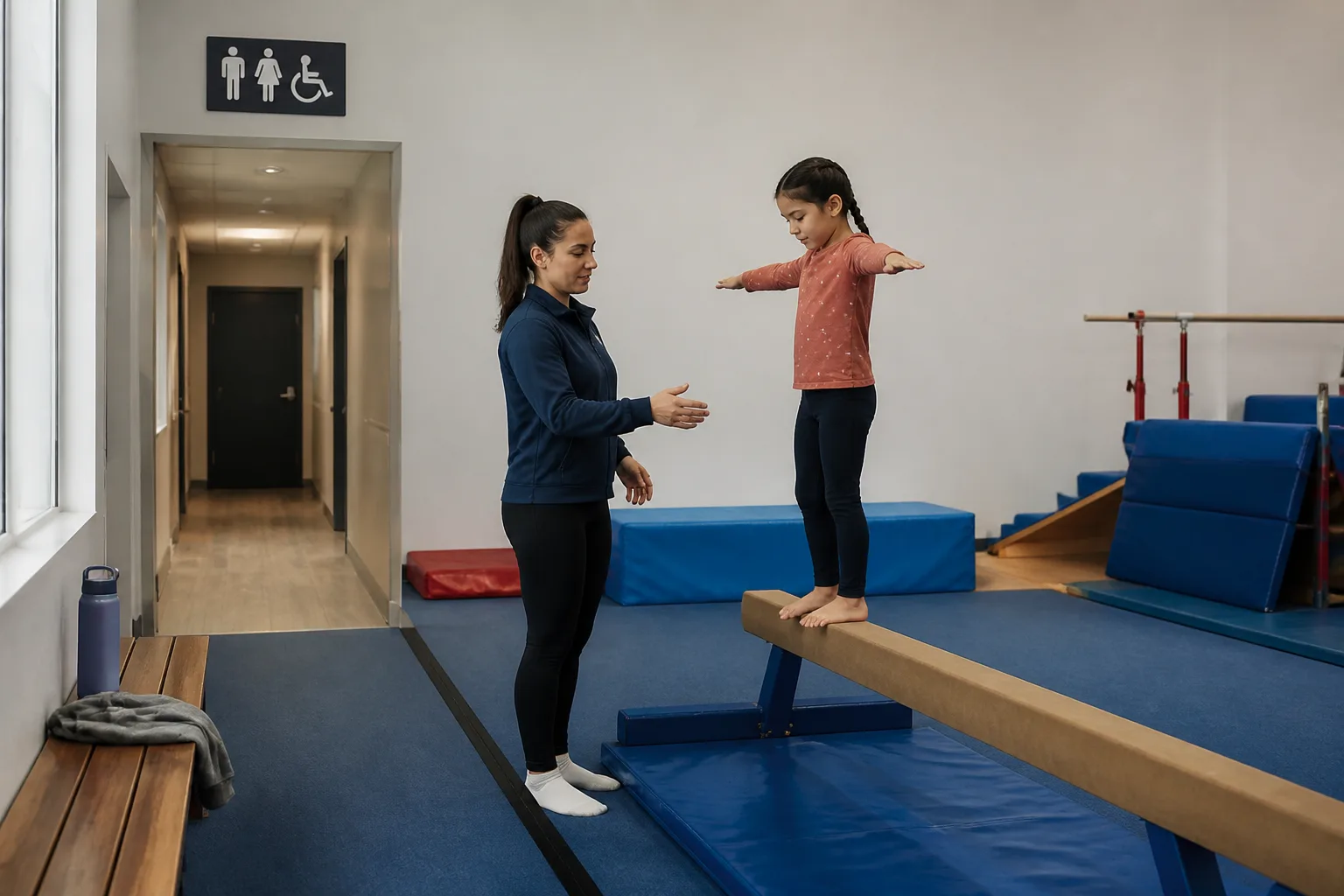
Be specific about the movement support your child might need. Do they need help getting on or off equipment, or help with balancing? Do they struggle with following a circuit, waiting for a turn, or recovering after a difficult attempt? Ask if a coach can change a station, demonstrate an exercise differently, or allow a pause without the child losing supervision. Just because a class is "recreational" rather than "competitive" doesn't automatically mean the instructor can provide the adaptations your child needs.
Can the child manage the class environment?
Environmental factors matter. Ask how loud the gym gets, how many different groups are sharing the floor at once, and how transitions are signaled to the kids. If your child needs predictability, ask for the order of the session and the routine for when class ends. If you or a support person need to stay nearby, find out where you can wait and if you need to get permission ahead of time.
Local clubs to contact with specific questions
Flicka Gymnastics Club is a North Vancouver club offering recreational and competitive gymnastics and advertising an autism-friendly class for fall 2026. Its current address is 240 East 23rd Street. Ask which group, coach and support arrangement that advertised class actually provides. Delta Gymnastics Society is listed in Delta with recreational programmes. Langley Gymnastics Foundation is listed in Langley with artistic gymnastics.
A club may run several groups with different coaches, apparatus, and support arrangements. Confirm access and adaptations for the actual session, rather than assuming a club-wide description covers every class. Contact the clubs directly with your child’s age, their specific needs, and the type of class you want, then ask for a concrete answer regarding the current group.
Give the provider useful information
It is much better to describe support in practical terms rather than just giving a medical diagnosis. For example, tell them: "the child understands one-step instructions," "they need extra time when stations change," "they use a mobility aid between activities," or "they get overwhelmed when multiple whistles sound." It also helps to mention what has worked for them in school, swimming, or other group settings.
Ask exactly who will receive this information and how it gets to the coach. Leaving a note at the front desk might not work if a substitute teacher shows up for the first class. You should also discuss privacy. Decide what the instructor actually needs to know and how your child would prefer help to be offered when other kids are watching.
Questions for the programme lead
- How many children and coaches are normally in this class?
- How does the group move between stations?
- Can an exercise be changed while preserving the lesson goal?
- Is there a quieter place for a supervised break?
- May a parent or support person remain close enough to assist?
- What should happen if the child needs to leave the floor early?
Use a visit or trial carefully
If a club offers a trial or an observation session, ask what that session is intended to demonstrate and if there is a fee. When you visit, don't just look at the equipment. Watch how they handle arrival, instructions, transitions, and pickup. A child might get a lot of one-to-one attention during a trial, but that might not be the level of support they get during a normal group session. Make sure the staffing you see during the trial reflects what the class is actually like.
Before you officially register, make sure you have recorded the agreed-upon support, the name of your contact person, and a scheduled time to review how things are going. Use the Little Ones BC activity directory to compare different programmes and browse the city pages to check your weekly travel. The best fit is a class where the staff can clearly explain how your child will participate from the moment they arrive until they are collected.