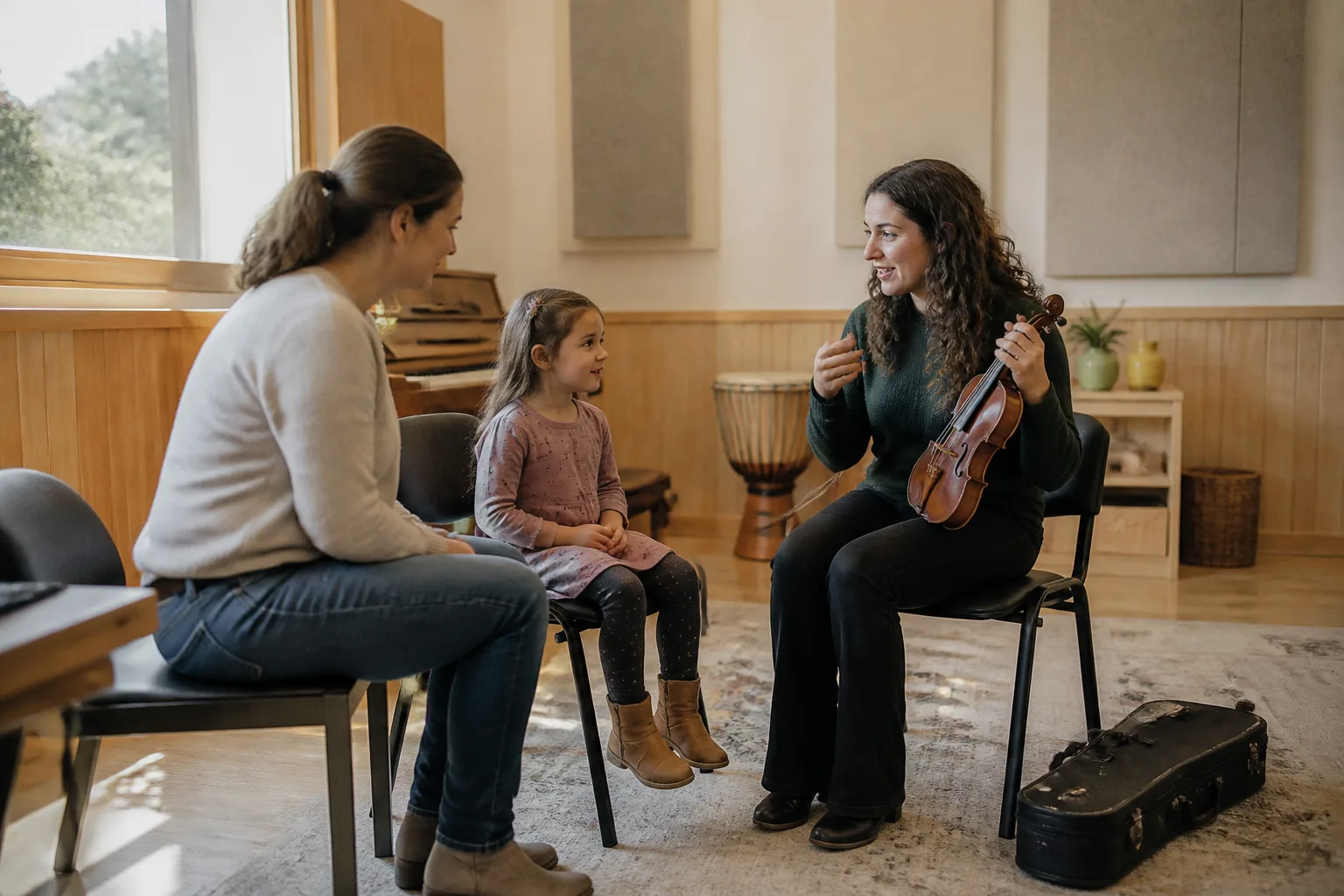
Lesson length and an instrument list describe what a school sells, not how a teacher will help this child learn. They tell you much less about how a teacher will help this child learn. Use the first conversation or trial to understand the teaching: how a beginner gets started, how practice is explained and what happens when the child struggles. Keep booking and equipment questions on the checklist; use this page to judge the instruction itself.
How will you choose a starting point?
You need to tell the teacher what your child is actually doing right now. Maybe they love singing, can copy a rhythm, or have just played around with an instrument on their own. Don't just rely on how many years of lessons they have had, because that doesn't always show what they actually remember or can do comfortably. Ask the teacher what they specifically want to see or hear before they decide on a starting level.
At Vancouver Academy of Music, Music with Friends is a group programme for ages three to six with caregiver participation and level-specific materials. You should ask how they pick the right level and how a newcomer fits into that sequence. At Music Star Learning Center, ask how the private teacher assesses a beginner in that specific instrument. These are two different ways to start, and remember that a child doesn't need to be able to read music to start asking these questions.
For Sarah McLachlan School of Music, make sure you clarify exactly what the application process offers. Most students start with Musical Discovery before moving into other pathways. Instead of assuming a child gets immediate private lessons upon admission, ask what that initial placement introduces and how they decide which pathway comes next.
What would a useful first term look like?
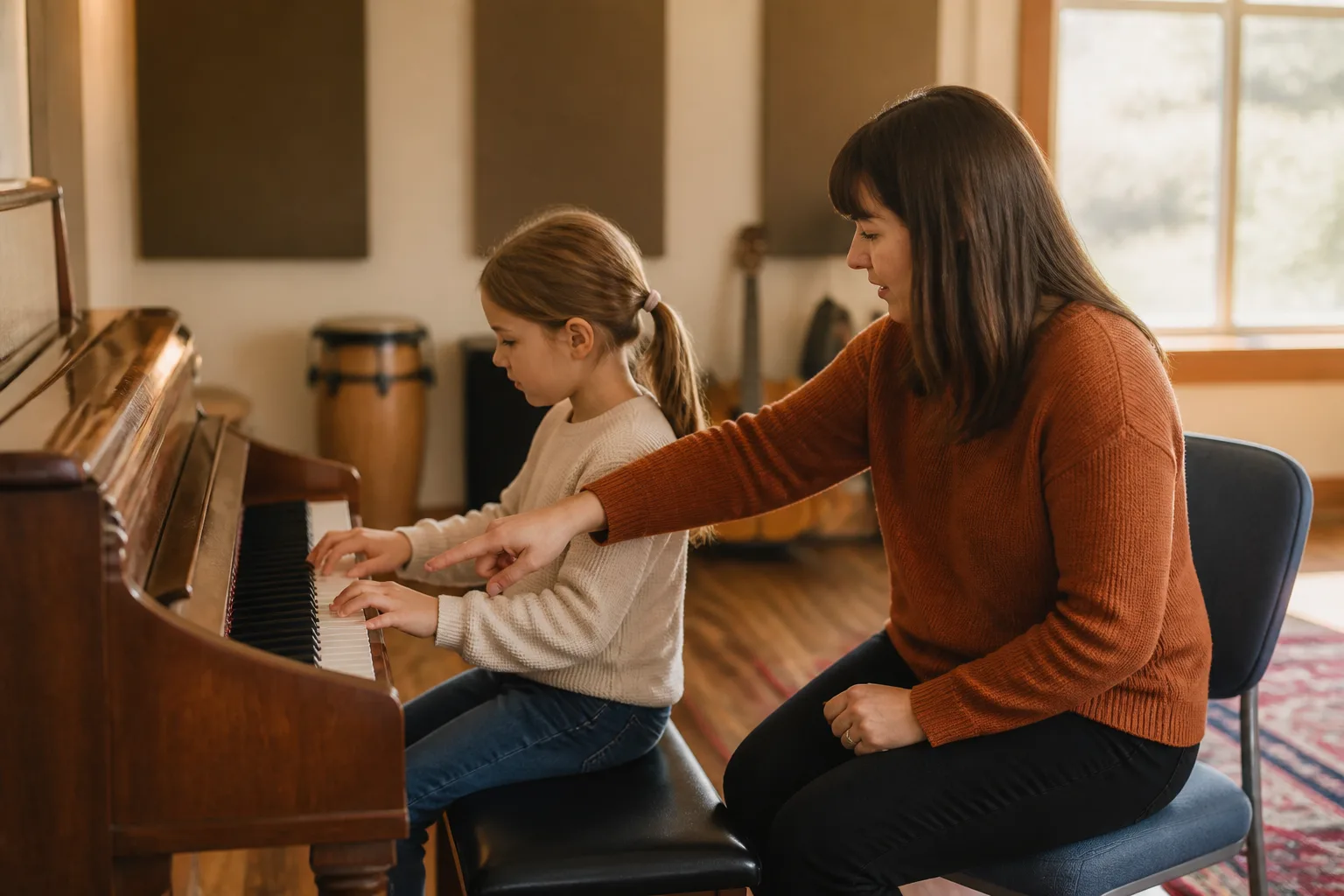
Ask for a real, concrete description of what progress looks like in their specific format. A teacher might talk about keeping a steady pulse, making a decent sound, following a short pattern, or playing certain beginner material. These are just things you might discuss, not promises that every program makes. A good answer will connect the child's current level to a manageable next step.
You should also ask how the teacher balances things like listening, playing, movement, notation, and repertoire. The goals for a group session with young kids are very different from a private instrument lesson. You should compare what the teacher explains with your child's actual interests and their ability to attend, rather than comparing them to another child's recital piece or exam level.
If the school mentions exams or performances, find out if they are optional. Don't treat a recital or an exam as the default way to measure if a term was successful until you've asked what the actual preparation for it involves.
How will we know what to practise at home?
Ask how they send assignments home and if the instructions include what to try, how to practice it, and when to stop. Simply telling a beginner family a page number or to "practice more" isn't very helpful. Ask what a parent should do if the child is stuck and doesn't understand the task once the teacher leaves the room.
For VAM's caregiver-participation group, ask what the adult actually learns alongside the child and which activities are meant to be done between sessions. For private lessons, ask if you can hear the closing instructions, get written notes, or have a quick word with the teacher. The role of a parent is different depending on the format, so don't assume it's the same for both.
Be honest about your home reality: do you have a dedicated instrument? Do you have shared walls with neighbors? What is the energy level like after school? Ask the teacher for the absolute minimum routine that will work for this specific programme. Buying more gear or adding more practice time won't fix an assignment if the child doesn't understand what they are supposed to be doing.
What happens when a child gets stuck?
Ask how the teacher handles things when a child repeats an error, loses focus, or gets frustrated. A helpful answer will explain how they break down tasks, demonstrate things differently, or revisit topics. Ask what kind of feedback the child gets during the lesson and how you will know if it's time to change how things are being handled at home.
Be practical about sensory, communication, or motor needs. A child might need one instruction at a time, visual cues, a break, or a predictable change in the lesson flow. Ask what can actually be accommodated in that specific room and lesson style, and if the teacher needs more info before a trial. A long list of available instruments doesn't guarantee these needs will be met.
Will the teacher and learning plan stay consistent?
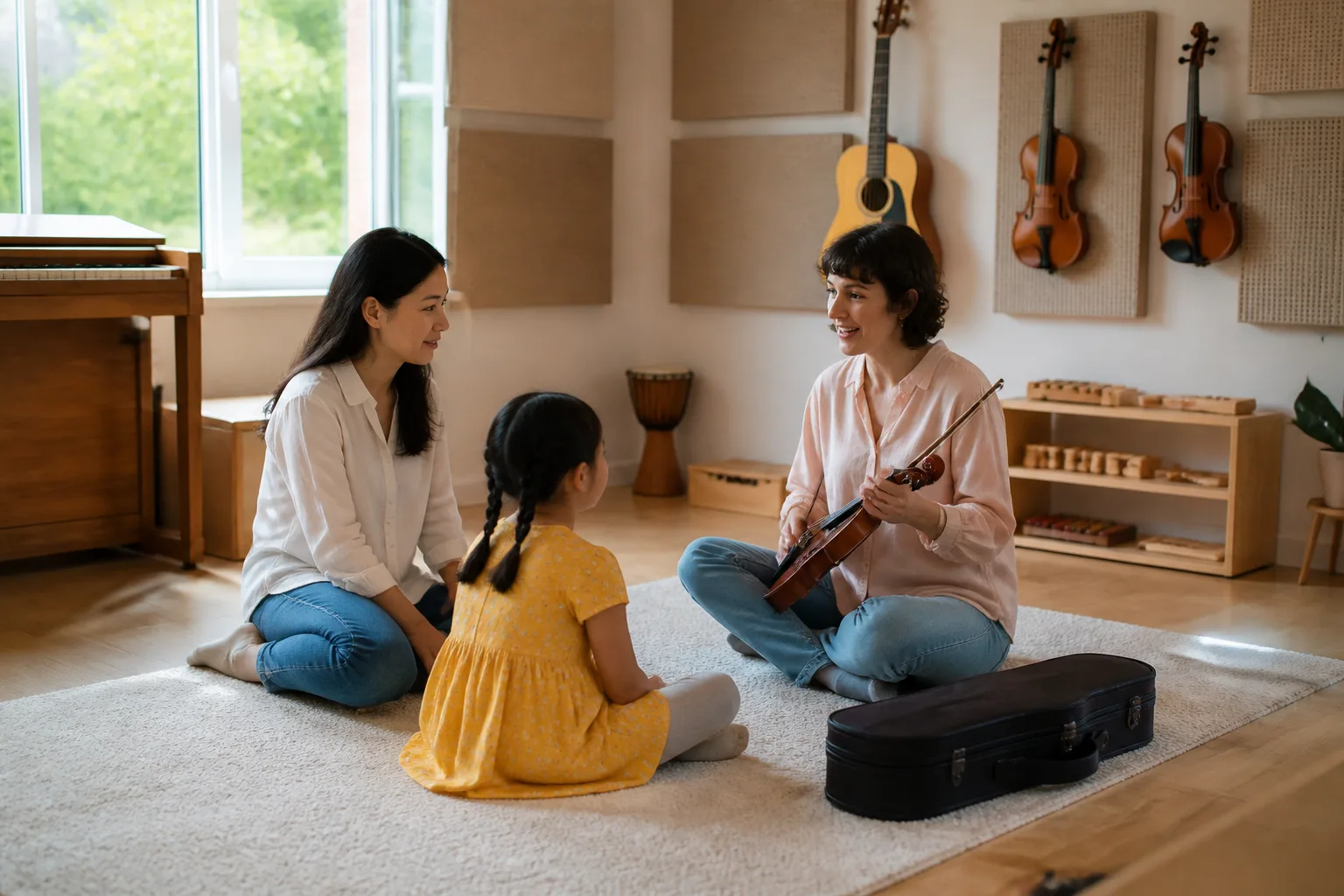
Find out if the person teaching the trial is the same person who will teach the regular lessons. Ask how a replacement teacher is introduced and how they keep track of progress notes. If a group has more than one teacher, ask who the family should contact when there are concerns about learning.
Ask how progress is reviewed and how new goals are set. Private lessons allow for individual assignments to change easily, but group lessons often follow a set sequence. Find out how the school handles a child who is moving too fast or needs more time, rather than just assuming that next term's registration will automatically fix a mismatch in levels.
What should we watch for during the trial?
Decide beforehand what a trial is actually supposed to show. Look to see if the child understands the next step, gets a chance to try it, and feels able to ask for help. Pay attention to how the teacher explains what you should do after the lesson is over. While one session won't show long-term progress, it is a great way to see if the communication works.
Once the lesson is done, ask your child what they liked, what was confusing, and if they knew how to ask for help. Then, compare that to what the teacher observed. You have a much better basis for joining if the child wants to go back and the family understands the next assignment, rather than just knowing the school has a lot of different instruments.
Use the music lesson choosing guide to compare different program formats, then take those ideas back to the actual teacher and level when you are ready.