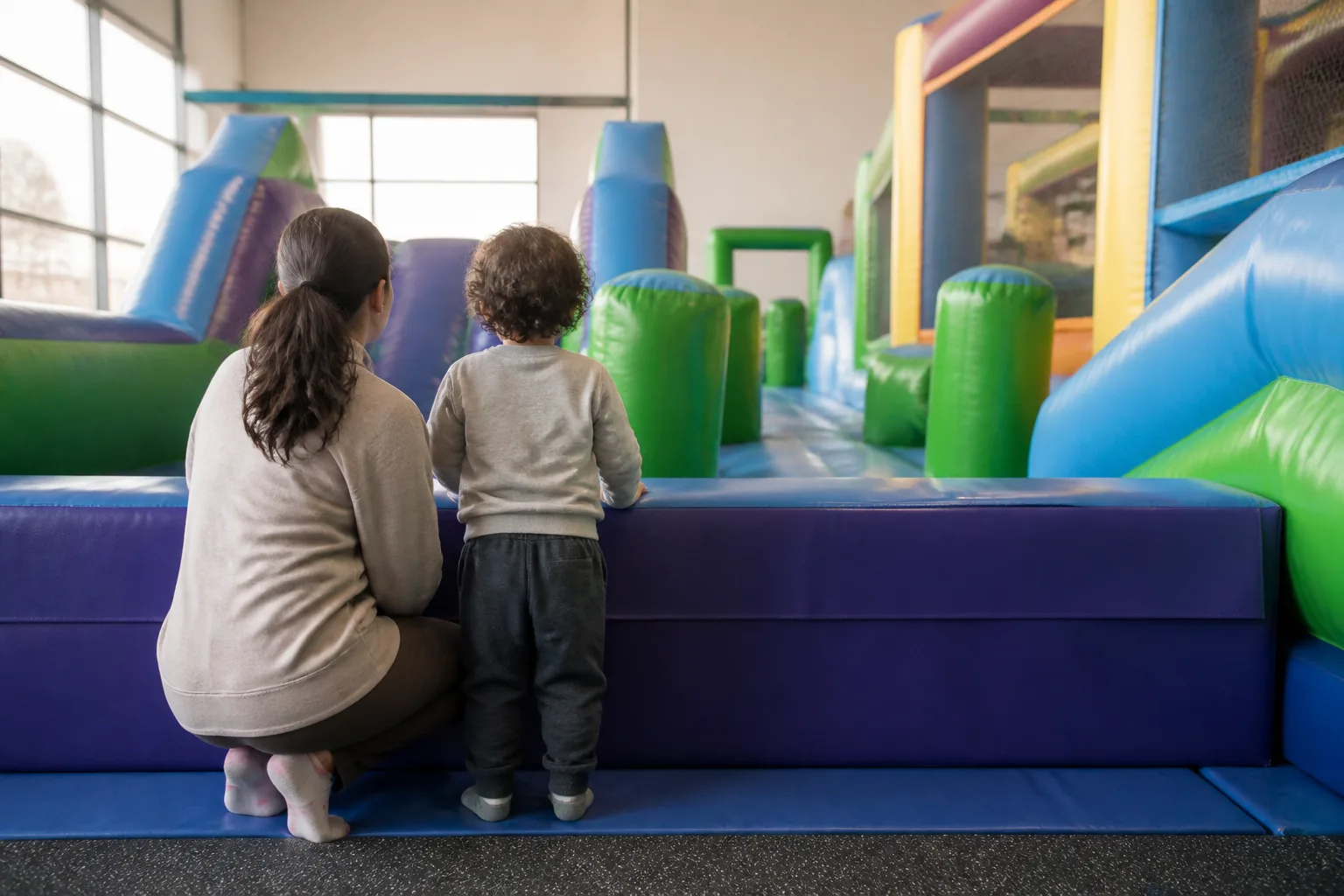
A wheelchair-accessible entrance does not establish that a child can use attractions built around climbing, balancing or independent movement. You need to look at the whole picture: how you enter the building, how spectators watch, and how a person actually participates in the activity before the session timer starts. It also matters which type of venue you are visiting. Booking an inflatable play area, a trampoline zone inside a larger center, or a coached gymnastics class are three very different things, and each requires different support arrangements.
This guide helps you figure out if a booking will work. It does not mean a specific venue is officially wheelchair accessible, sensory friendly, or staffed for one-to-one support; those details must be confirmed directly with the venue.
Identify the activity and its restrictions first
If you are looking at Extreme Bounce Inflatapark in Surrey, you are looking at an inflatable-play venue. They have a minimum height requirement of 42 inches and run 60 or 120-minute sessions. Make sure you check those height rules before you assume a child can participate; having an accessible building doesn't change the height requirements for the equipment.
If you go to Jungle Jacs Play Center in Port Coquitlam, you are dealing with a trampoline zone located inside a bigger indoor play center. You'll need to ask specifically about how to reach that zone, how to use it, and how to move between different attractions. If you are heading to TAG Sports Centre in Port Coquitlam, you're looking at coached trampoline gymnastics. Don't assume a gymnastics lesson is just an open-jump ticket; you'll need to ask about the specific apparatus, the coach, the lesson style, and what adaptations are actually possible.
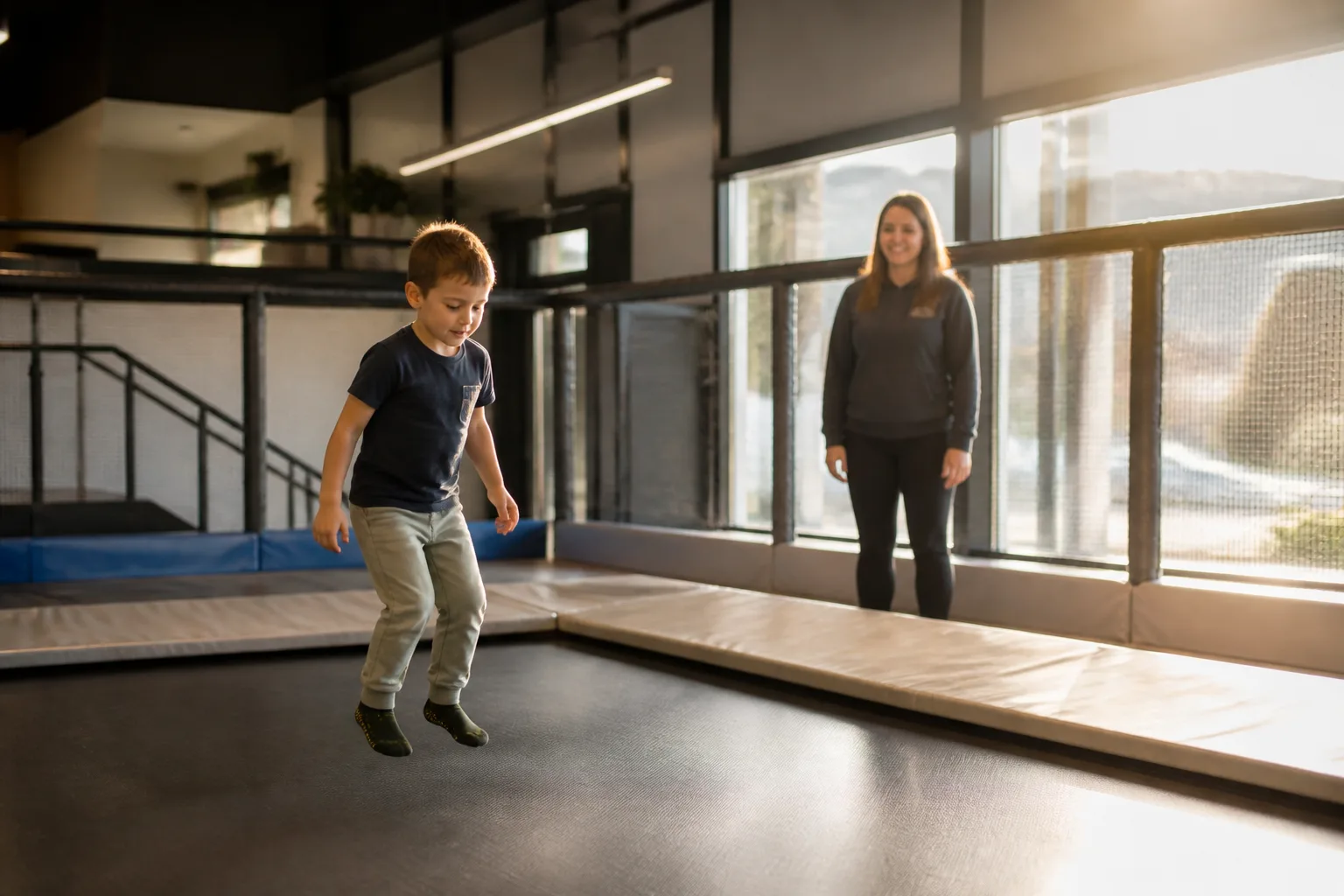
Once you know what you're doing, explain exactly what kind of movement support the child uses. Ask if they'll need to deal with stairs, raised edges, narrow gates, or transferring onto a moving surface. You also need a plan for when the child gets tired or needs help leaving the equipment. If the staff can't explain how the entry, activity, and exit will work, then just knowing the entrance is accessible isn't enough to say they can participate.
Check the complete physical route
You need to track the path from the accessible entrance all the way to the activity. This includes check-in, where you put your shoes, where you sit, the washrooms, and finally the attraction itself. Check that the entrance is actually open when you plan to go and confirm that any lifts are working. If you use a mobility aid, ask if it can reach the support or seating areas and if it can stay nearby without blocking the exit.
Find out who at the venue is allowed to provide physical help on the attractions and if a caregiver can go in with the child. Never try to improvise a transfer or put a mobility device on a jumping surface unless you have an agreed-upon procedure from the staff. In a coached class, the instructor should be able to tell you which alternative tasks are possible given the specific equipment and supervision available.
Establish the sensory conditions of the session
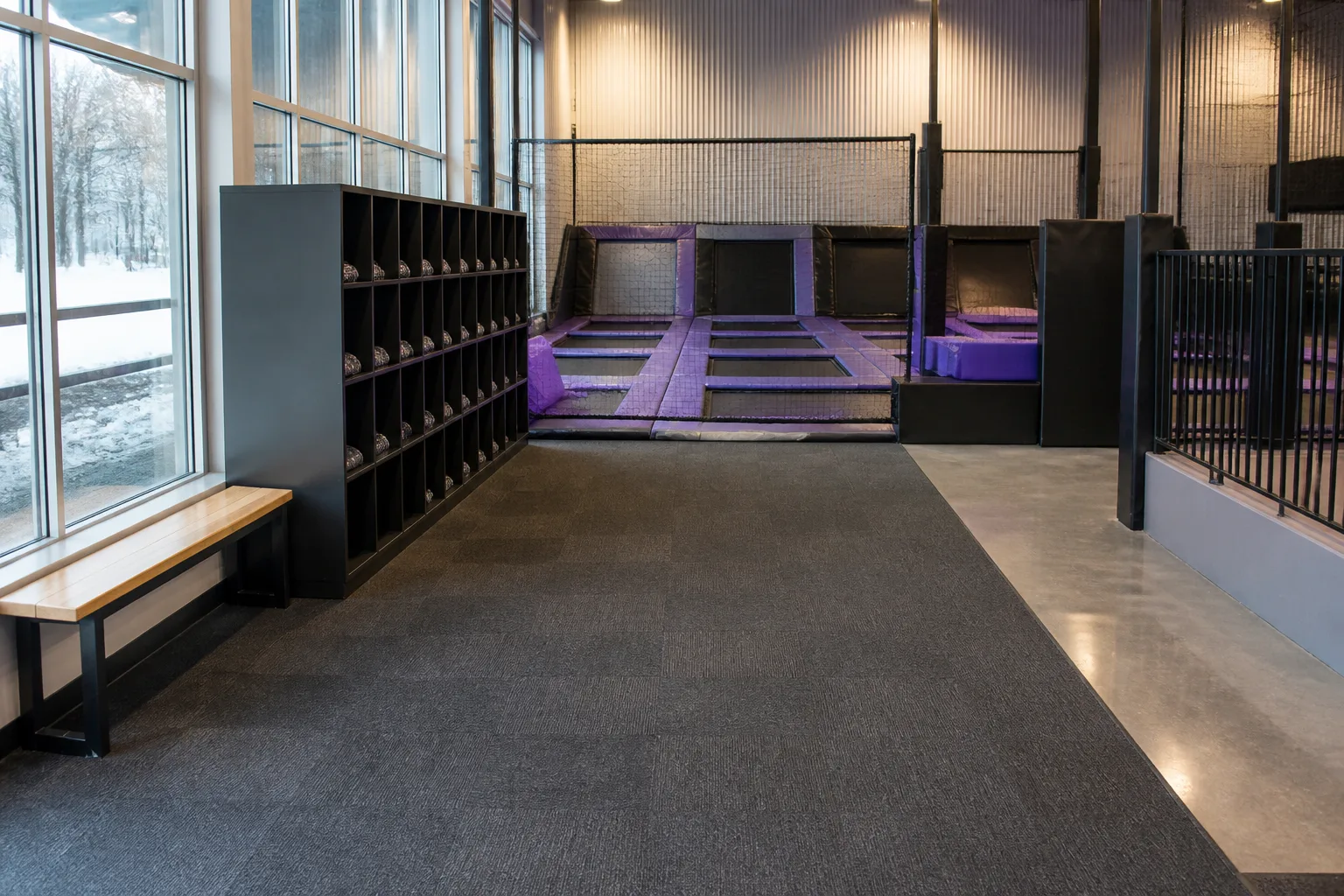
Ask about the environment during your specific time slot. You want to know about the music, lighting, noise from blowers, and whether there are loud parties or school groups scheduled. A "quiet" weekday session doesn't mean there won't be specific loud effects or sudden noises. See if the venue can send you a layout beforehand or if they allow a quick walk-through.
If a child needs a break, they need a way to get to a quiet spot and a place to sit. Ask if they can leave the attraction, move to a less stimulating area, and then come back, and whether their session time keeps running while they are away. Also, find out where the supporting adult is expected to stay. If you use hearing protection or other specific aids, check the venue's rules on those before you show up at the gate.
Agree who supports and supervises the child
The staff enforcing the rules are not the same as a personal caregiver or a booked one-to-one support person. You need to be clear about which adult is responsible for moving the child between areas, helping them communicate, managing breaks, and handling the departure. If you have siblings playing in different areas, figure out if one adult can actually handle all the support required.
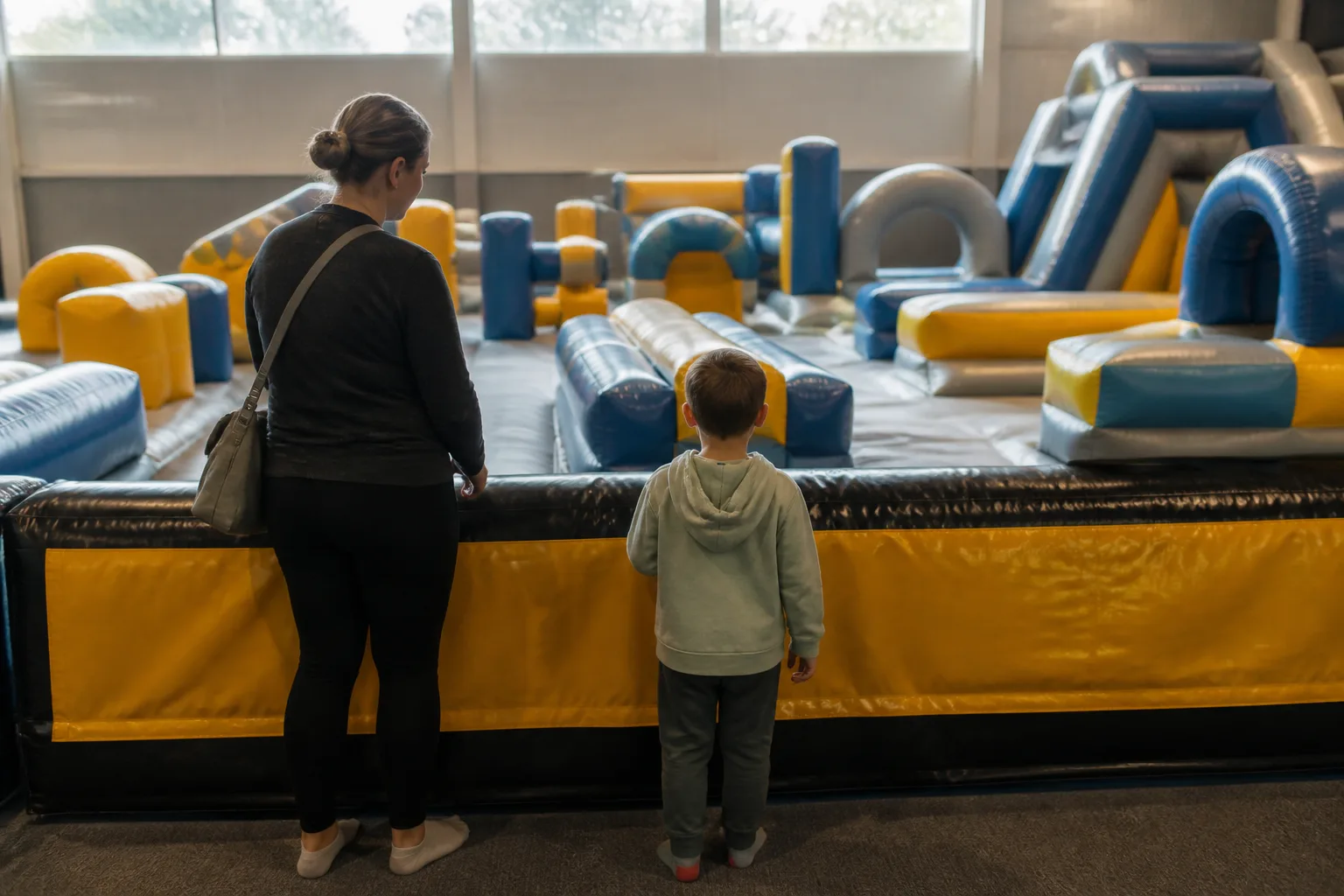
Check if your support person needs their own ticket or registration. For information on admission for support persons, check out the Easter Seals Canada Access 2 programme. You should look at their current venue list and check how your specific venue handles bookings; don't just assume they take the card. Remember, the card is for admission rules, not a guarantee that every part of the venue is accessible.
Use an initial visit to answer the remaining questions
If you can, try to arrange a trial or a short observation. This lets you see the actual noise levels, how busy it is, and what kind of support is actually available during a normal session. Don't buy a multi-visit pass until you're sure the activity is something the child can actually use. For gymnastics, find out if the trial uses the same coach and group the child will be with normally.
Before you go, set a "stop" signal and a plan for how to leave or take a break. Always follow the venue's safety rules; just because there are accessibility adaptations doesn't mean an unfamiliar jumping move is safe. If you have medical or health questions about whether someone can participate, talk to their doctor rather than relying on what a salesperson tells you.
When you're done, take a moment to record what actually worked. Note if the child could use the equipment, if the adult could stay close enough, and how the breaks and exit went. You can use the activity directory to look for other options if this one didn't work. A good plan means the child gets a meaningful experience with a clear way to start, pause, and finish. Having a long list of attractions doesn't mean much if you haven't sorted out how to actually use them.