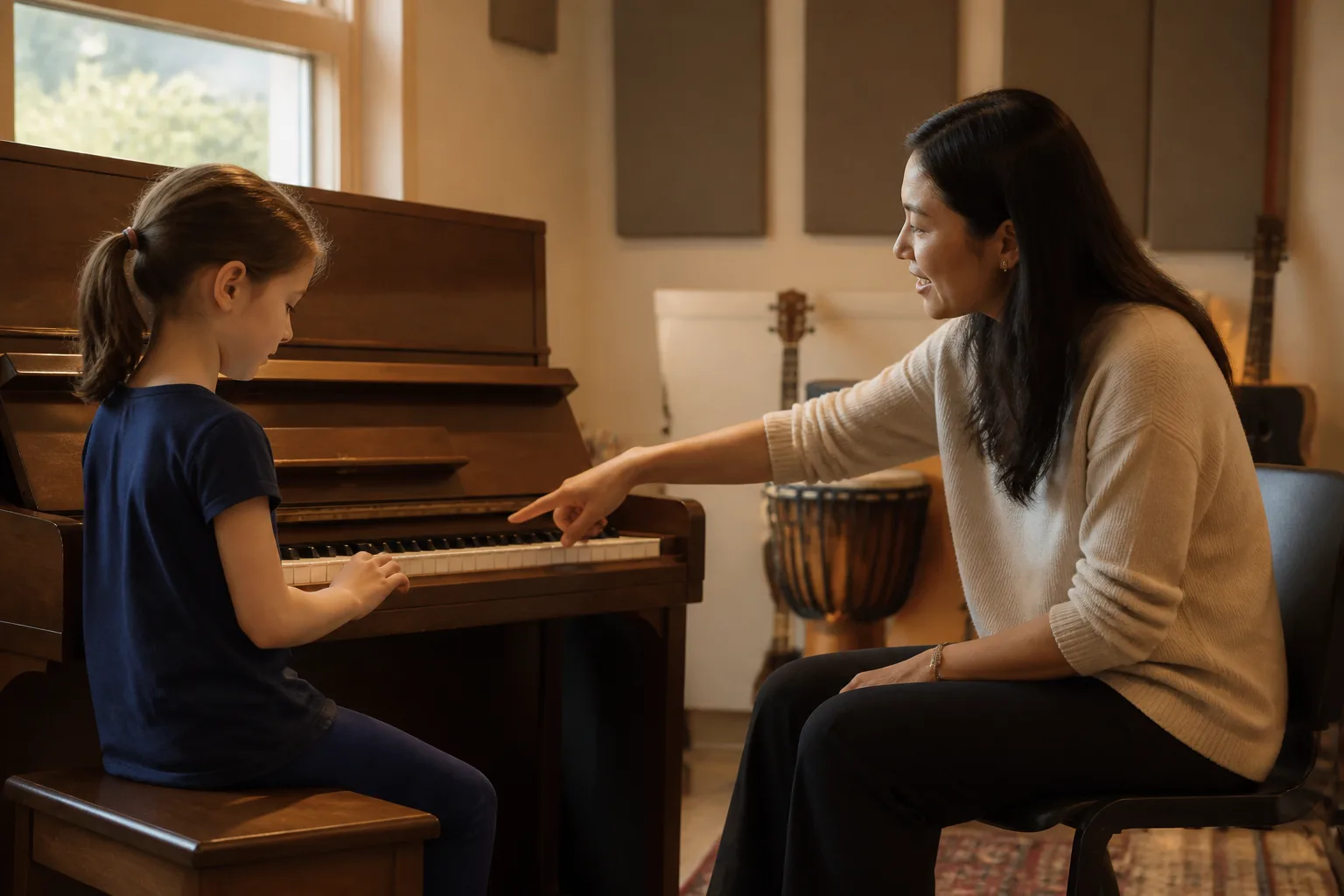
The first music lesson follows the teaching format rather than one standard sequence. Rather than expecting a standard sequence of events, it is better to prepare your child for the specific duration, materials, and roles associated with the type of lesson you booked.
A private lesson
Music Star Learning Center provides individual lessons in 30-, 45- and 60-minute sessions, and they do offer a 30-minute trial. Teachers can use that initial meeting to establish the child's starting point and determine if the instrument is a workable fit. While it is possible to attend a first lesson before purchasing anything, Music Star notes that students generally need an instrument at home to continue practicing.
The specific teacher you book will decide the order of the lesson and what the first assignment will be. A child gets one-to-one attention for the entire reserved duration, but you shouldn't expect them to have a completed song or a fixed amount of playing under their belt by the end of day one.

A caregiver group
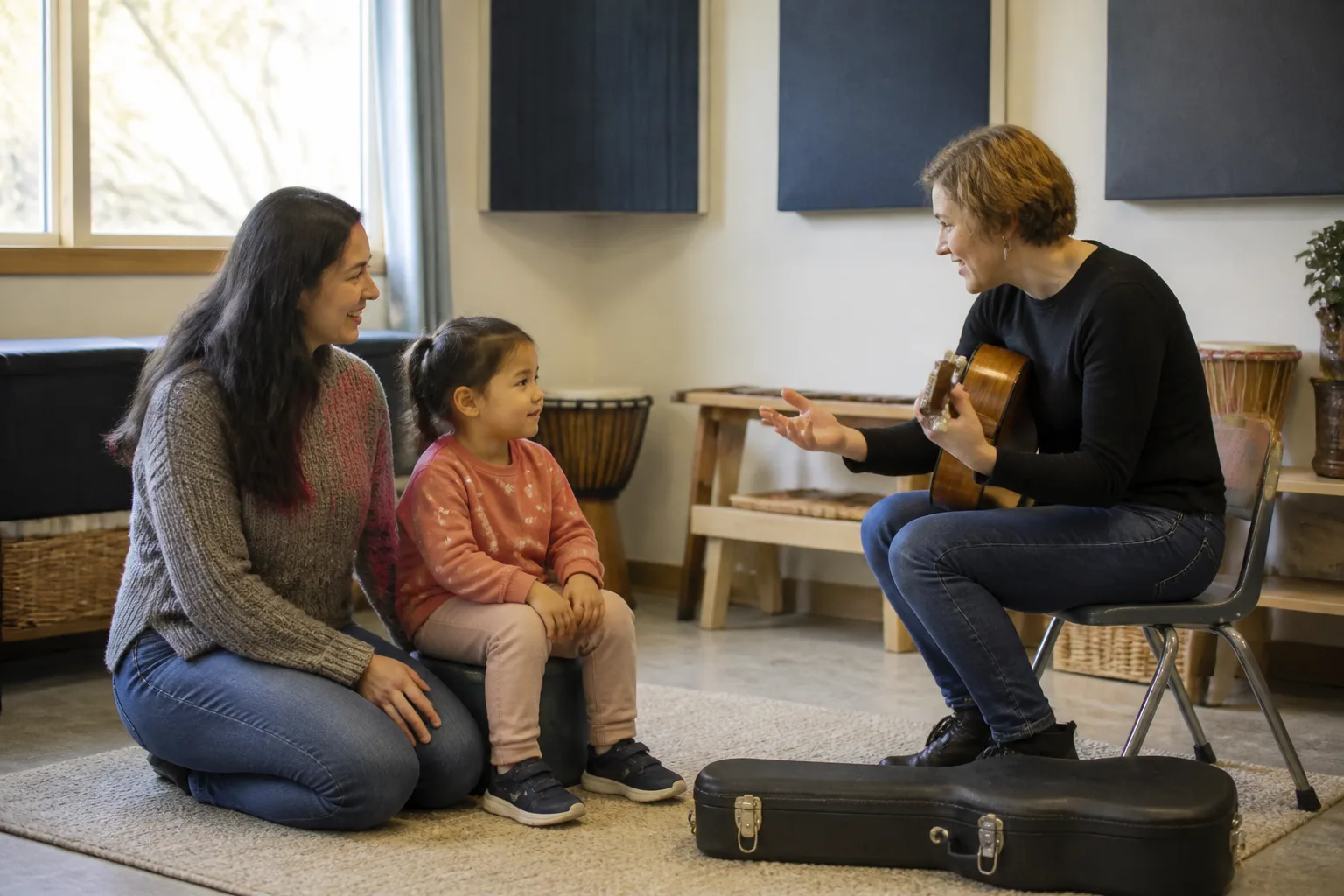
Vancouver Academy of Music offers "Music with Friends" for children aged three to six, which involves caregiver participation. This is a semester-based group consisting of 14 classes in the fall and 16 classes in the spring. Caregivers should be ready to participate in the activities and should plan to bring the required book or instrument for their selected level into the home.
This is a social environment that differs from a private lesson. The child shares the teacher's attention with a group, and the accompanying adult is an active part of the learning process rather than just an observer in a waiting room.
An application-based programme
Sarah McLachlan School of Music provides tuition-free, barrier-focused programming through an application process. Under their Musical Discovery commitment, students spend one to two hours per week. Once a student is accepted, their first visit follows the specifics of their assigned programme and campus, so you should use the acceptance information to guide your preparation.
Regardless of the format, you should leave your first meeting with three concrete facts: the next scheduled date, the specific material or instrument needed, and the teacher's first home assignment. These details are more reliable than assuming every music school follows the same practice routine.
How the first visit informs the next one
At Music Star, a trial can help you decide if the specific teacher, instrument, and lesson length work for your family before making a longer commitment. Note that the trial doesn't set the price for other durations; the 30-, 45- and 60-minute rates are priced separately.
At VAM, the caregiver should leave the first session knowing how to use the assigned level's book or instrument between the group meetings. Because there are 14 classes in the fall and 16 in the spring, continuity is built into the curriculum.
At Sarah School, the assigned programme and acceptance letter establish the weekly structure. Even though the program is tuition-free, the first visit isn't an unscheduled drop-in; you must stick to the assigned campus and the one-to-two-hour Musical Discovery commitment.
A first meeting is successful when the family knows what comes next: where to go, who needs to attend, what to bring, and what needs to be practised. Musical skills are built over the course of the selected programme rather than being expected to emerge during the very first lesson.