
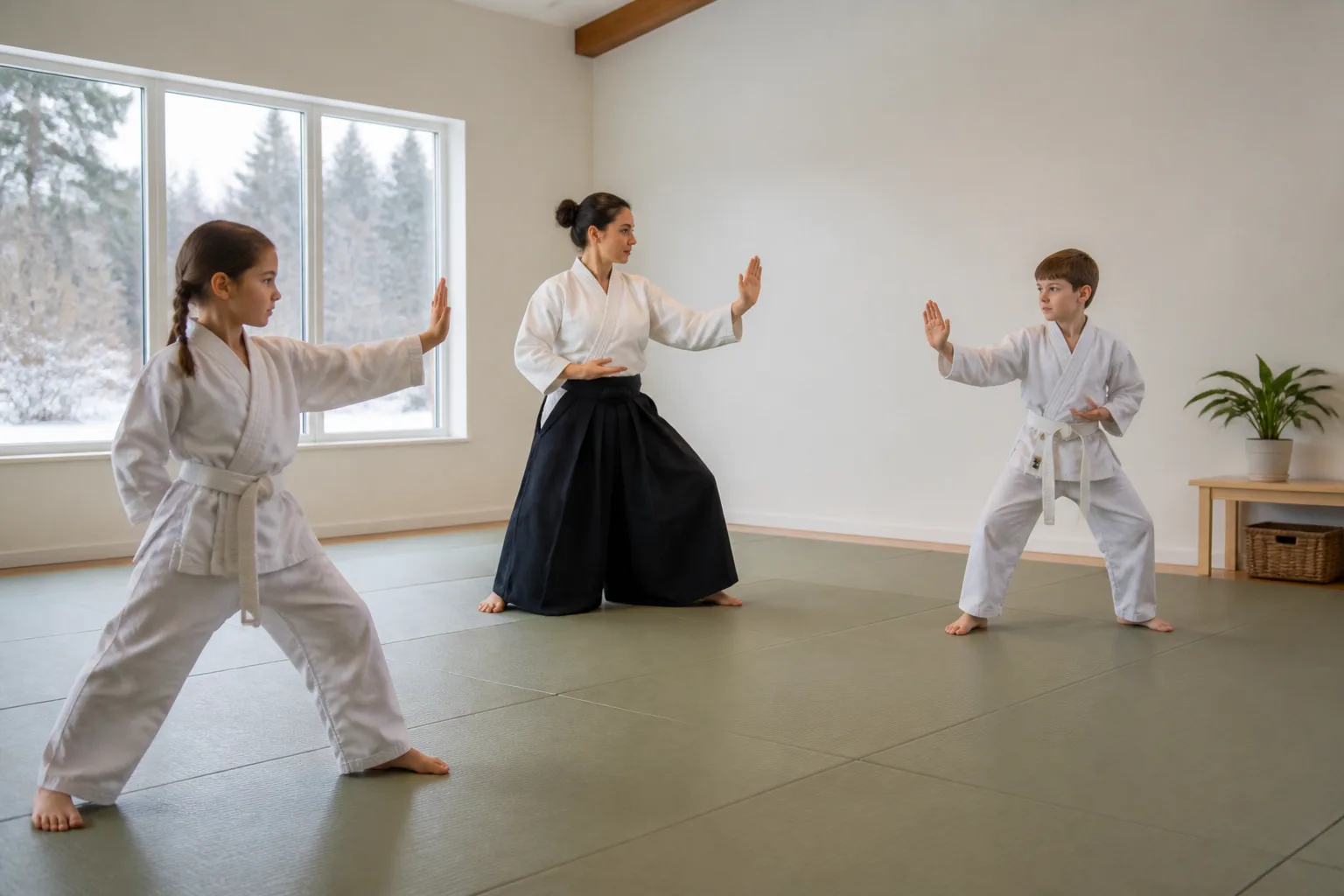
Martial arts covers programmes with very different movement, contact and teaching routines. Walking into a first class without knowing the specifics can be a gamble. You might find a program that focuses on movement games and structured routines, or you might walk into a room where kids are immediately doing partner drills or grappling with protective gear. While the specific style is important, you also need to look at the age groups, the instructor's style, how much physical contact is involved, and the actual enrollment terms. Don't just pick a gym because of a catchy name. You need to ask about the specific children's class your child will actually be attending.
Compare a specific class at a specific branch
Hawkes Martial Arts in New Westminster offers programs focused on children's martial arts and self-defence. Over in Langley, Revolution MMA lists options for ages 5–15, including Jiu-Jitsu and kickboxing/MMA, alongside their adult and after-school programs. It is important to remember these are different things. Checking out a birthday party or an after-school program won't give you a clear picture of the actual timetable, the level of physical contact, or the long-term commitment required for a standard weekly beginner class.
You can find other providers and different branches listed in the Little Ones BC activity directory. If a school has multiple locations, check the specific branch address and its individual timetable. Just because different branches share the same branding doesn't mean the instructors, age groups, or the way they handle beginners are identical at every location.
Ask what children do in the first month
Marketing material is full of buzzwords like "building confidence" and "discipline." Those are fine, but they aren't practical. A much better question to ask is: what will a beginner actually be practicing during those first few classes?
Contact and partner work
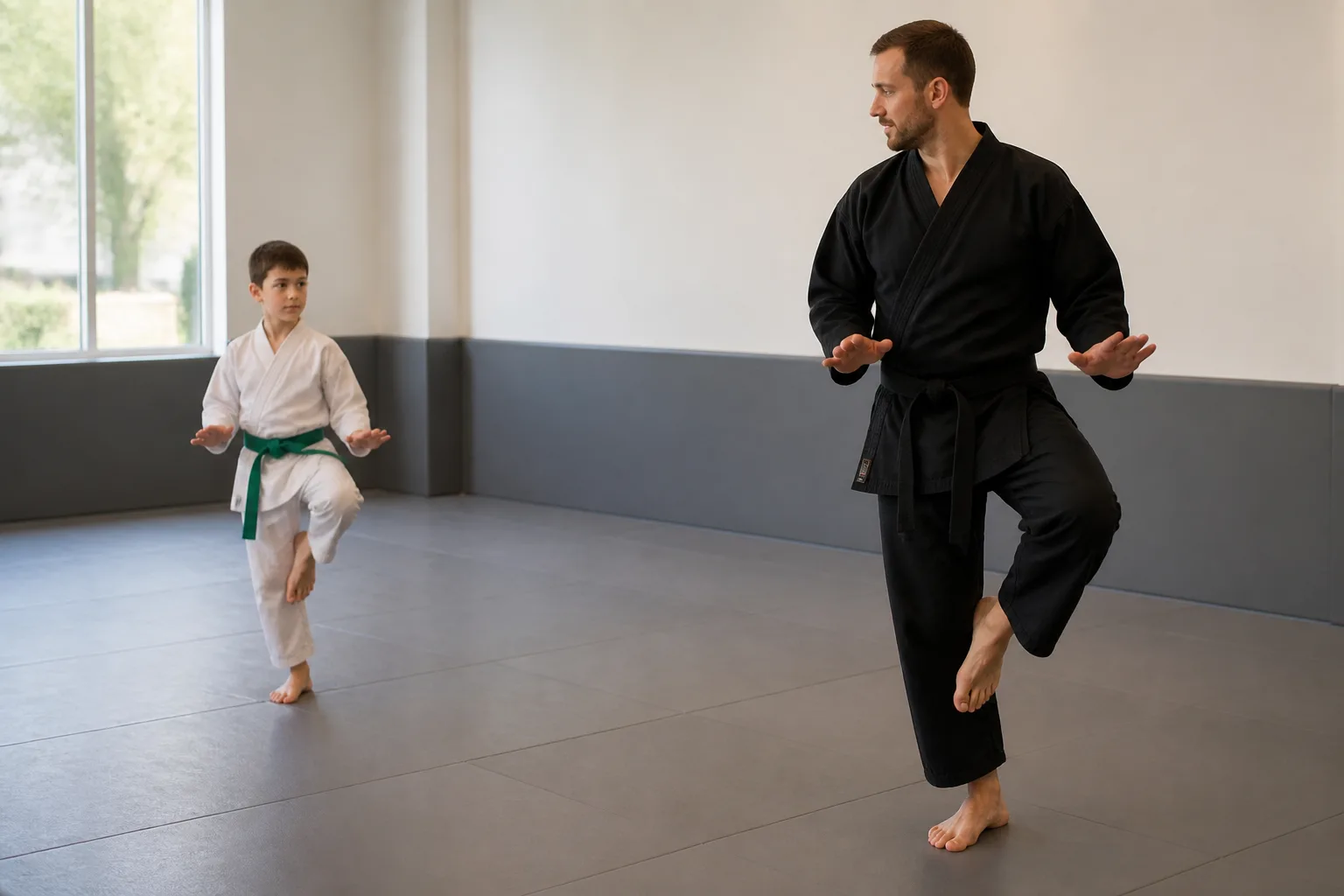
You need to know if the introductory classes involve striking pads, grappling, sparring, or other types of partner drills. Ask how they match partners in terms of age, size, and experience, and when they start requiring protective equipment. Knowing whether the label is “karate,” “Jiu-Jitsu,” “kickboxing” or “MMA” does not tell you if your child will be hitting something or someone.
If your child isn't comfortable with physical touch or close-contact partner work, tell the provider before the trial starts. You can ask if they can watch a drill first, work one-on-one with an instructor, or step out of the group without it being a big deal. Unless the provider explicitly confirms that a specific class is non-contact, do not promise your child there will be no contact.
Instructions and class pace
Find out how many kids and instructors are on the mat at one time, how they demonstrate instructions, and how they manage a room with kids of varying experience levels. For the younger kids, ask how much time is spent on actual technique versus playing games or waiting for a turn. For older beginners, ask if they are placed in classes based on their age, their experience, or a specific assessment.
If the school uses a system of belts or stripes, ask what those actually represent at that specific school. Progression systems are not standardized, and you shouldn't feel pressured to rush a child into a grading just because a certain date is on the calendar.
Treat the trial as an information-gathering visit
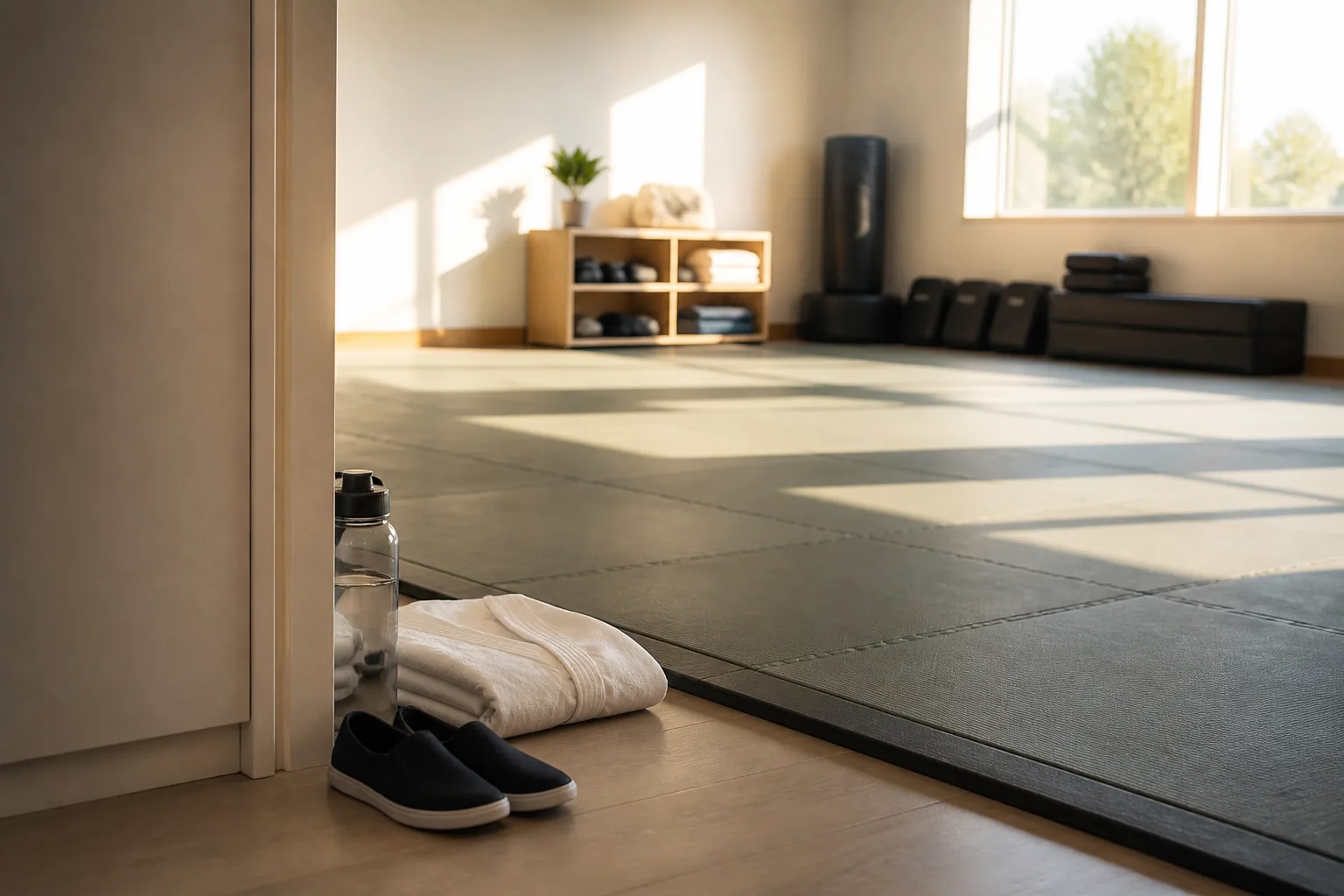
Check the cost and make sure they aren't forcing you into an immediate enrollment obligation. Give the provider your child's age, their experience level, and any specific support needs they might have. Also, don't go out and buy a uniform before you know if it is actually required or if they require a specific brand.
While you are there, watch how the instructor operates. Do they explain the "why" behind the activities? Are they pairing children together thoughtfully? Do they step in immediately to correct unsafe behavior? You should also look at the logistics: Is the arrival process clear? Where do parents wait? How do children get released after class? Check if the space is actually set up so your child can hear and follow directions.
When you leave, don't just ask your child if it was "fun." Ask them what actually happened. Which parts were clear? Was there a moment where they felt lost? Would they feel comfortable going back to that same group? An energetic class is exciting, but you are ultimately choosing a weekly teaching arrangement.
Get the complete enrolment terms in writing
Introductory offers are usually much simpler than the actual contract you will eventually sign. Before you hand over any money, get the full cost and the commitment details in writing:
- Tuition frequency and the total number of classes included.
- Registration charges and any required association fees.
- Required uniforms and protective equipment.
- Whether gradings, belts, or special events carry extra charges.
- The contract length, how it renews, and how much notice you need to give to cancel.
- Rules regarding holidays, missed classes, pauses, and makeups.
- Any specific conditions for sibling or family pricing.
Compare different programs directly. A monthly price, a four-week billing cycle, and a fixed-term program are not the same thing. If a school says attendance is “unlimited,” ask which specific sessions a beginner is actually allowed to attend.
Discuss support without relying on broad promises
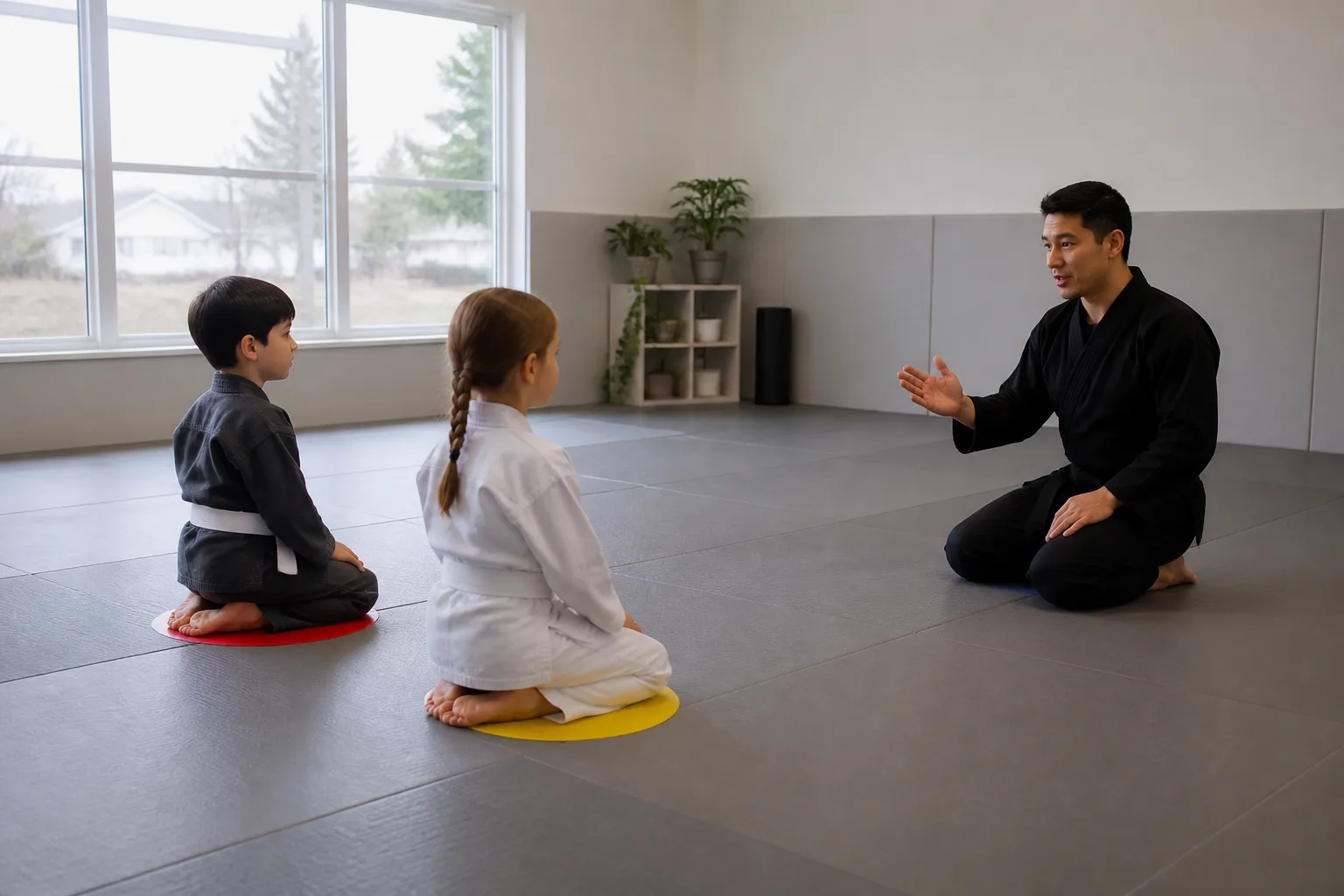
Explain to the instructor what participation looks like for your specific child. They might need instructions given one at a time, a demonstration before they try partner work, help joining a group, or a predictable place to take a short break. Ask the instructor what they can realistically provide during a standard class.
Avoid picking a program based on promises of guaranteed changes in behavior or focus. No class can actually guarantee personal outcomes like that. A better indicator of quality is an instructor who can explain exactly how they teach beginners, how they enforce boundaries, and how they communicate progress or concerns to parents.
Decide whether the weekly routine is sustainable
A good program should be easy to understand before you make that first regular payment. You should already know the discipline, the age group, the expected level of contact, the gear you'll need, the total cost, and how to leave the program. You also have to factor in the commute. A nearby class with a clear path for beginners is often a much better fit than a famous program that requires a difficult drive.
Wait a while and reassess after a few normal classes, once the initial excitement has worn off. If your child understands the routine, feels safe asking for help, and actually wants to keep going, you have much better evidence that it's a good fit than any marketing slogan could provide.