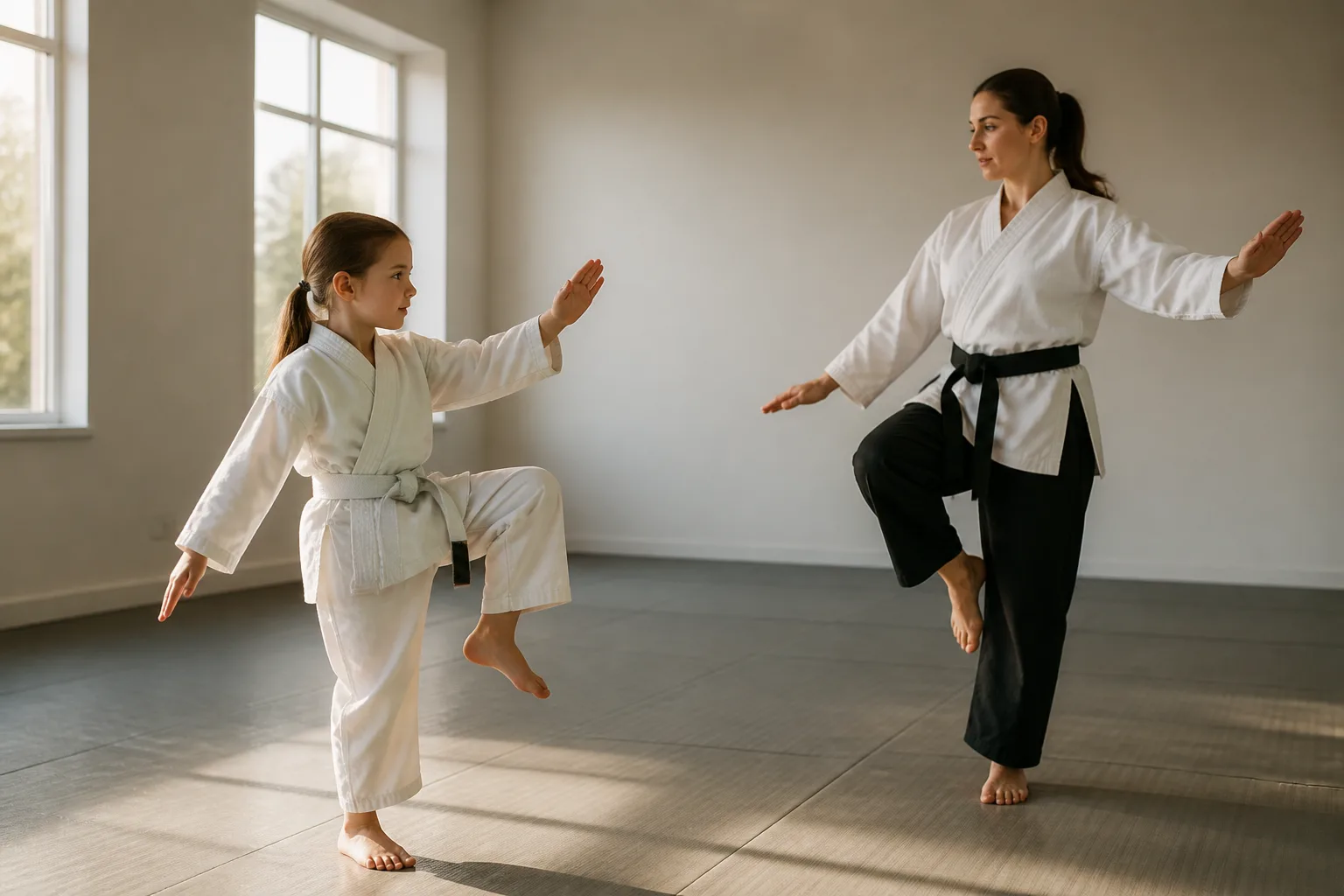
A first visit may be a standard class or the start of an after-school care programme, with different handoffs and expectations. Even though they all fall under the martial arts umbrella, these setups have different schedules, handoff procedures, and levels of adult supervision. You should prepare your child based on the specific program description rather than promising them a certain warm-up, drill routine, or amount of physical contact.
An ordinary karate class
Hawkes Martial Arts is located at 484 East Columbia Street in New Westminster and teaches Meibukan Goju-Ryu Karate-do. Their kids' programs start at age four, and the school focuses on a black-belt progression path.
These details tell you the style, the starting age, and the long-term goal, but they won't tell you exactly what happens minute-by-minute in that first lesson. Karate can include things like individual techniques, set sequences, or partner drills, but Hawkes doesn't specify if a beginner does those immediately, when sparring starts, or if a new student needs to wear a uniform right away.
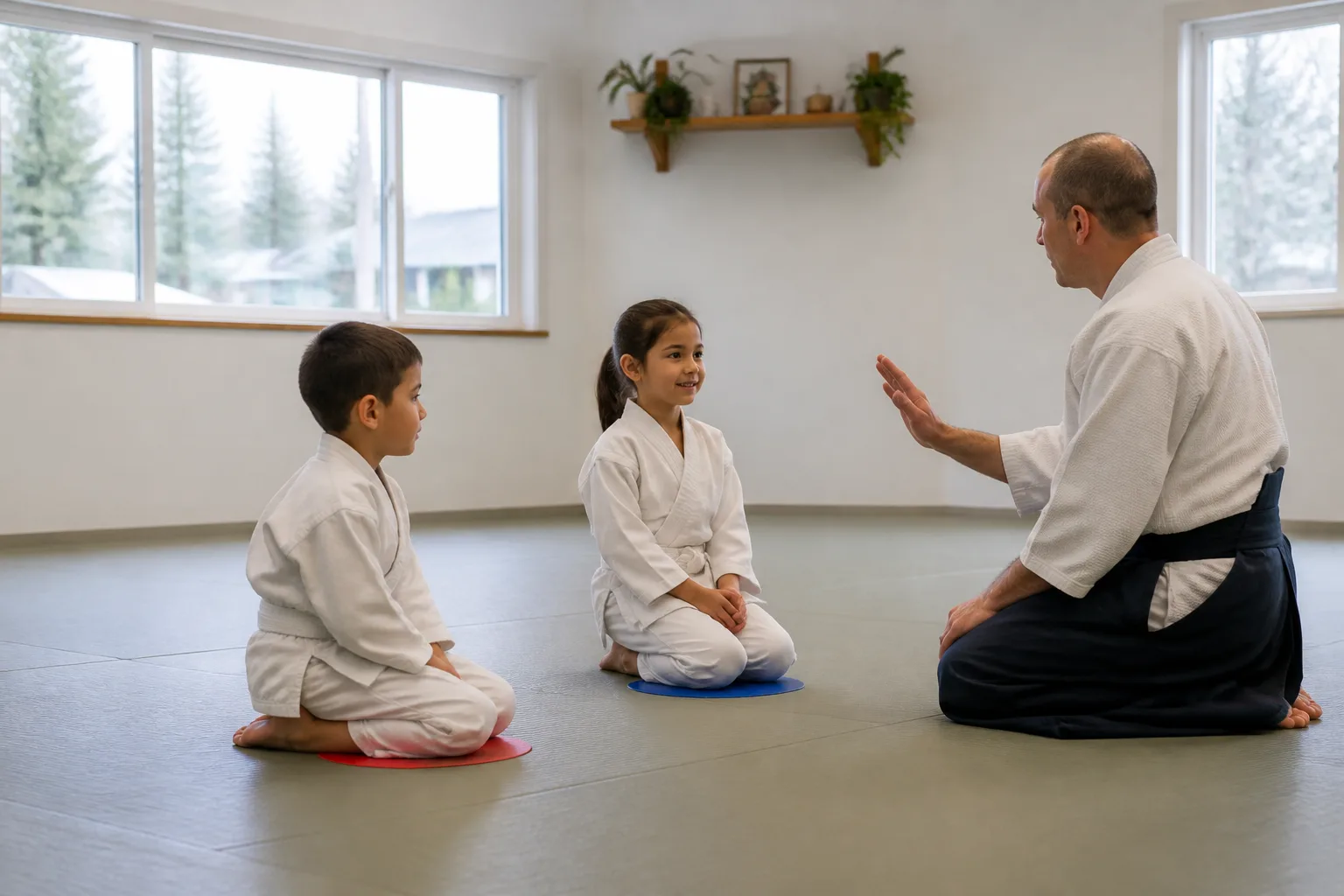
The instructor is the one who decides the first exercise and how much contact occurs. As a parent, you should watch to see if the demonstrations are easy to understand, if the kid actually gets a chance to try the movements, and if they are allowed to pause before they start working with a partner.
An ordinary Jiu-Jitsu or kickboxing class
Over at Revolution MMA in Langley, they offer Jiu-Jitsu and kickboxing for kids aged five to 15. They have classes five days a week and offer the first two classes for free.
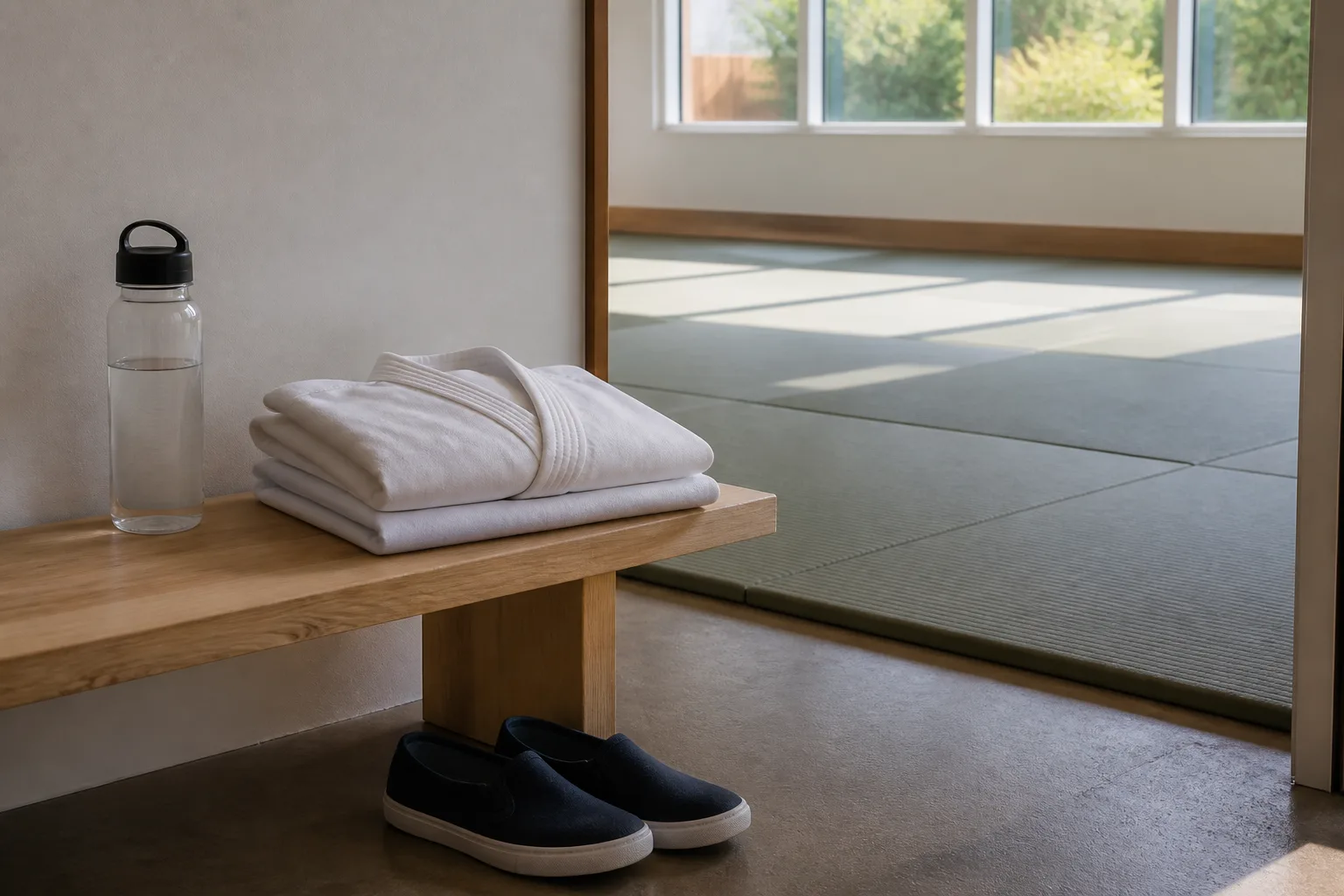
You should go into these two disciplines with different expectations. Jiu-Jitsu involves grappling positions and often requires close contact with a partner. Kickboxing uses striking and might involve hitting pads or other targets. Revolution doesn't state when a beginner starts live grappling, sparring, or specific contact drills. They also don't mention if trial students should bring their own gear or if they can borrow a gi, gloves, or pads.
The trial class is your chance to see if your child is okay with the specific distance and contact level of the discipline. Once the class is over, check to see if the instructions were clear and if the physical contact actually matched what the gym promised.
The Revolution after-school sequence
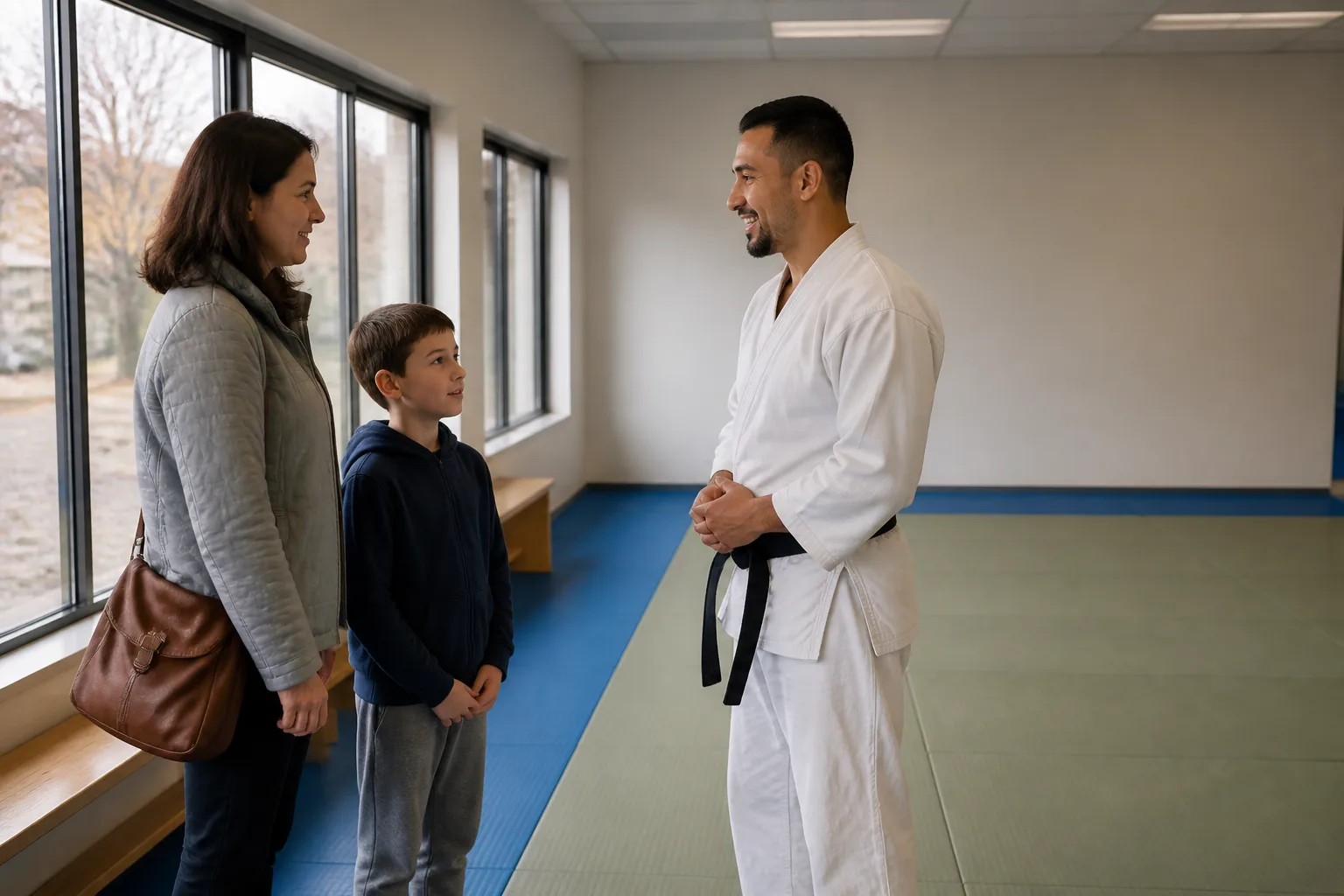
Because Revolution provides a specific routine for their after-school program, you can know exactly what that looks like. Staff pick the kids up from school, then they have time for a snack and a bit of downtime before moving into free play and games. The actual martial arts instruction happens from 4 to 5 pm, and parents pick up at 6 pm. Jiu-Jitsu is on Monday, Wednesday, and Friday, while kickboxing is on Tuesday and Thursday.
In this setup, the day starts at the school, not when you arrive at the gym. For the child, the martial arts portion is just one hour of a much longer afternoon that includes travel, snacking, winding down, and playing. Pickup is at 6 pm, and kids are only released to a parent or a person you have designated.
What the first visit should establish
A first visit should help you answer specific, practical questions: Did they actually teach the discipline they advertised? Did the child understand what was being asked of them? Was the level of contact what was described? If it was an after-school program, did the long gap between pickup and release work out as planned? These are the things that tell you how the child handles that specific format, even if it doesn't predict every future class.