A free trial can show whether a child enjoys the class, but it does not reveal the cost of the following months or required gear. It won't show you the bill for the next three months, the cost of gear, or what happens if your schedule changes. You need to look at the ongoing contract just as closely as that first visit. The local options listed below were checked on September 30, 2026; make sure you check for any current promotional terms before you book anything.
Separate the trial from the membership
Revolution MMA in Langley offers two free children's classes, covering Jiu-Jitsu and kickboxing for kids aged five to 15. Before you commit, find out if they'll let your child try both styles, if they lend out equipment for the trial, and if you need to register beforehand. They don't list their ongoing tuition rates for kids on their site.
Hawkes Martial Arts in New Westminster also does two free introductory karate lessons. Their site mentions a $50 coupon for full membership via email, but you'll need to ask which membership actually qualifies, when that coupon expires, and if you can stack it with other deals. Don't assume that $50 discount applies to your comparison until the school confirms it. Classes start at age four, and they provide ongoing tuition info only upon enquiry rather than a public price list.
A trial might cost you nothing in lesson fees at these schools, but the total cost of staying could still be a mystery. You still need to clear up travel costs, gear requirements, and registration fees. Remember, a free trial doesn't guarantee a free membership, a no-contract setup, or a permanent spot in the class.
Compare the same period and number of classes
Don't just look at the monthly rate. Ask every school for the total amount you'll pay over the first three months, or for a full term if they require longer commitments. This total should include tuition, mandatory registration, any equipment you must buy, and any grading fees that happen during that window. Only subtract a discount if the school confirms it applies specifically to that membership. Keep optional things like extra classes, competitions, or branded gear out of this calculation.
Also, make sure you're comparing apples to apples. A single weekly class is a different product than an unlimited membership. An unlimited plan is only a good deal if your child can actually attend the sessions that fit your life; look at how many beginner classes are available around your existing school and transport schedule. Check if they allow make-up classes and if the number of teaching weeks changes during school holidays.
To get a real sense of value, divide the total cost of your chosen period by the number of classes your child can realistically attend. Keep the length of the commitment in mind. A low "per-class" cost doesn't matter if you're locked into a long-term contract that forces you to pay much more in total.
Equipment rules can change the starting cost
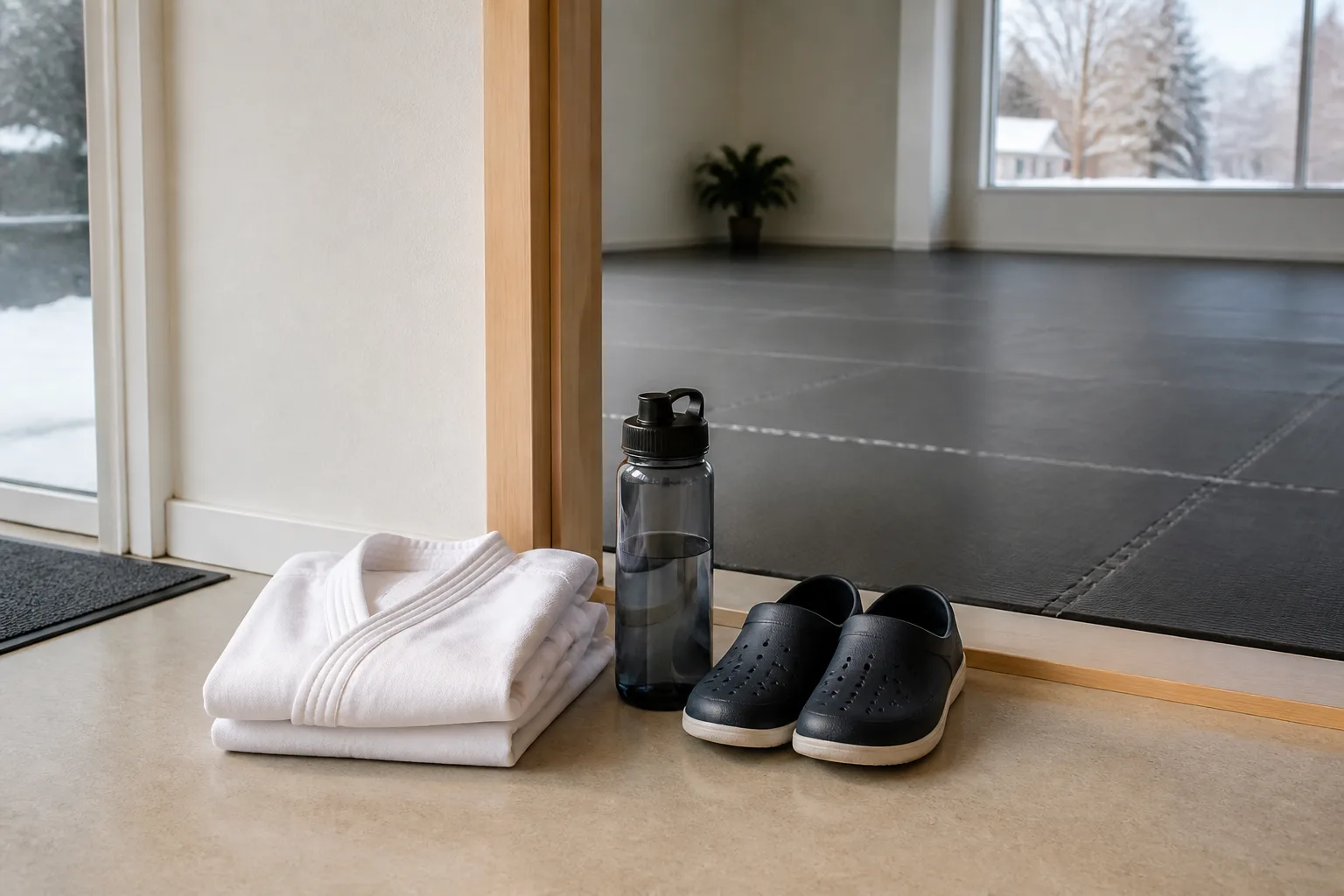
Ask what they need for the trial, what you'll have to buy once you join, and if they require a specific brand or certain specs.
Raven Grappling in Coquitlam lets students buy their own gear instead of forcing you to buy their branded kit. This lets you shop around, but make sure you know the exact size and type required before you spend money. It is much cheaper to buy the right thing once than to buy a cheap, unsuitable version twice.
Don't forget to factor in cleaning and replacement. If your child trains on consecutive days, you'll need to be able to wash and dry uniforms quickly; having a spare set is a convenience, not a necessity. Only count branded gear as a mandatory fee if their contract says it is.
Read the exit terms before comparing monthly prices
Raven Grappling's policy is that they don't use fixed monthly or yearly contracts and they let you pause, cancel, or change your membership. That's a big difference compared to an unspecified monthly fee. Even so, you still need to ask about notice periods, when the next debit occurs, the rules for pausing, and any written conditions. Flexibility doesn't tell you exactly when the payments will stop.

For any school, you need to know the minimum commitment, if memberships renew automatically, the deadline for cancelling, and what happens to unused classes. Ask what happens if the school cancels a session, if your family goes on vacation, or if your child needs a long break. A pause for medical reasons might have different rules than a simple change of mind. Always read the full agreement before paying anything; never assume the trial terms are the same as the long-term ones.
Keep after-school care and competitions separate
Revolution's after-school option is a big package: it includes school pickup, snacks, downtime, activities, a martial arts class, and supervision until 6 pm. Don't compare this to a standard class fee; compare it to other childcare options that cover those same days and schools. Check the pickup coverage, how it follows the school calendar, and if there are extra charges for the care.
Raven says competitions are optional. Just every school handles tournaments and grading differently. Ask if a kid can just do it for fun without competing, how they track progress, and if any testing or event fees are required. Keep travel and entry costs for these events out of your basic tuition comparison.
You need two numbers to make a decision: the cost to get started and the amount you'll still owe if you stop at the end of your comparison period. Once those numbers are clear, a free trial is a great way to see if the school is a good fit, rather than just a way to guess the price.