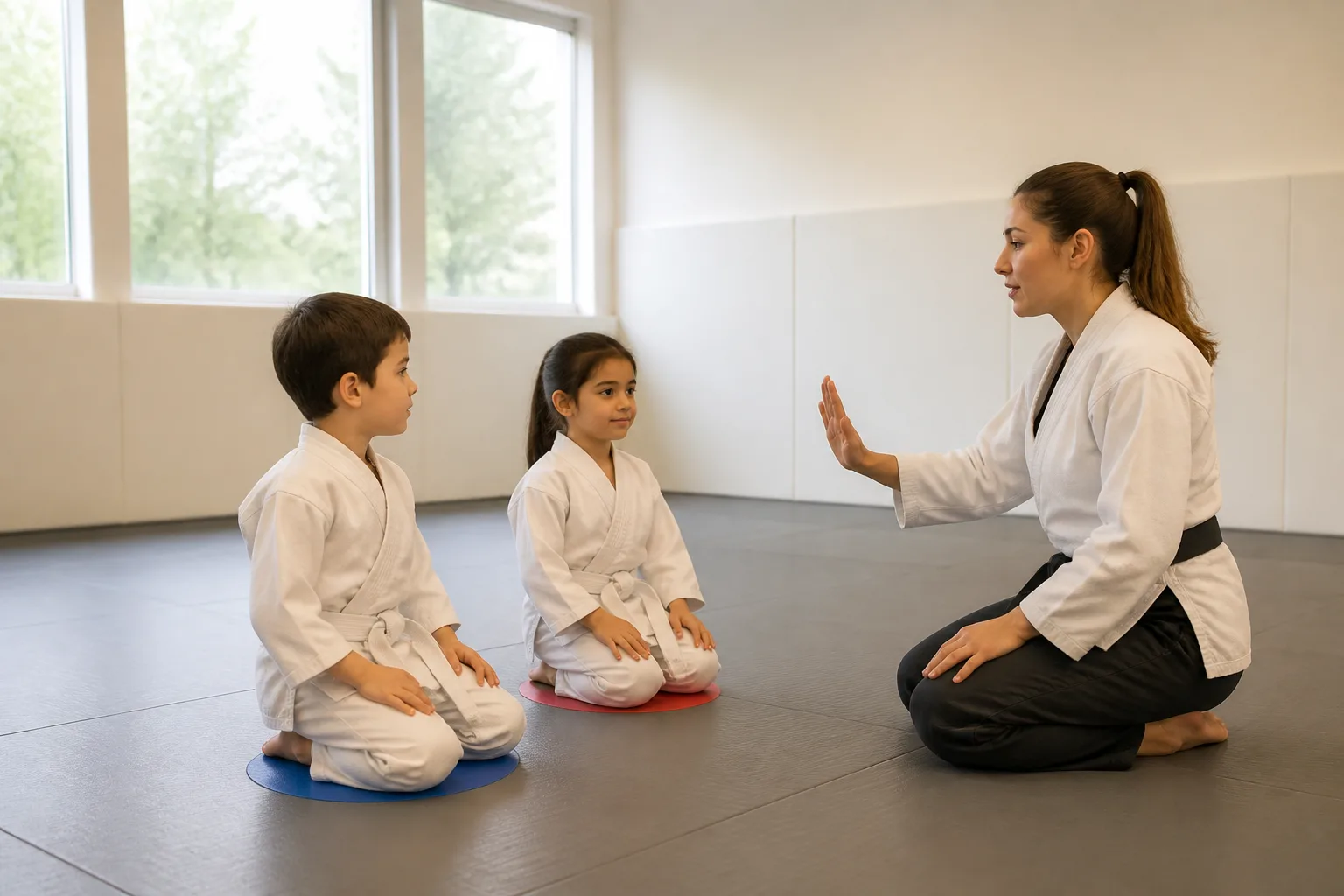
The practical difference between martial arts options often lies in movement, partner contact and the class routine. If you are looking at options in the area, you'll see Goju-Ryu karate in New Westminster being offered alongside Jiu-Jitsu and kickboxing in Langley. The real differences are in the mechanics: structured karate drills, grappling in Jiu-Jitsu or striking in kickboxing, rather than which one is better for building discipline.
Karate: a defined style and rank pathway
Hawkes Martial Arts is located at 484 East Columbia Street in New Westminster and teaches Meibukan Goju-Ryu Karate-do. Their programs for kids start when they turn four, and they follow a clear black-belt progression.
In a karate class, you'll usually see a mix of solo techniques, set sequences, and drills with a partner. Hawkes doesn't specify the exact breakdown of these elements for their kids' classes or exactly when sparring starts. It is still helpful to look at their specific style and rank system as a starting point, but you'll want to check which specific drills beginners do, how they move up in rank, and how they introduce contact with partners.
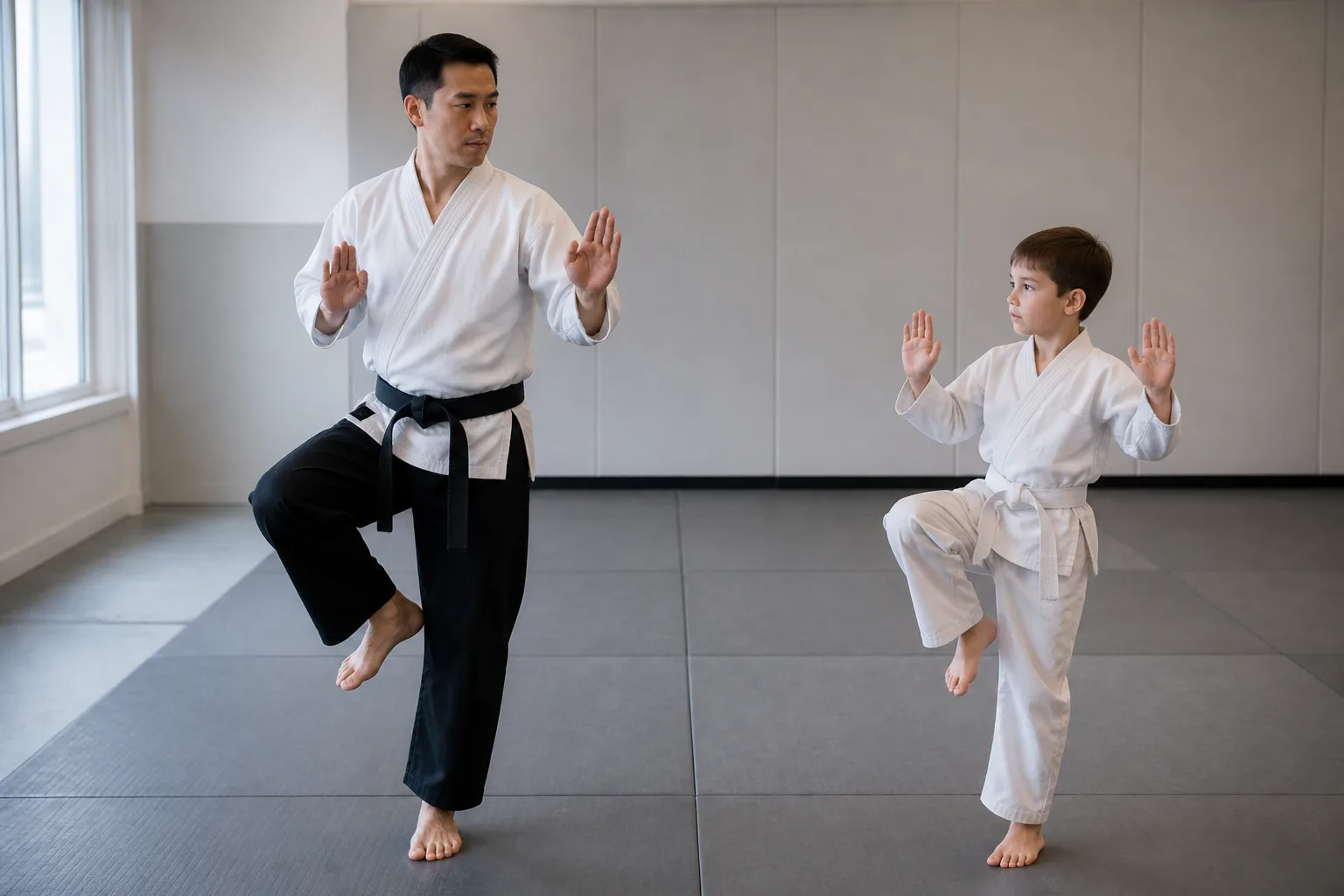
This is a distinct option if you want a named tradition and a long-term belt system, but the label doesn't tell you the noise level, the exact pace, or how much contact is involved in a specific class.
Jiu-Jitsu: grappling and close partner work
Over at Revolution MMA in Langley (Unit 201, 6001 196A Street), they offer Jiu-Jitsu for kids aged five to 15. Because Jiu-Jitsu is based on grappling positions, being in close contact with a partner is a core part of the training, even for beginners who are just starting out.
To figure out if it's a good fit, you should ask if the class uses a gi, how they match partners by size or skill, and when students start working against live resistance. Revolution doesn't list those specific details online, so don't assume a first class will involve "rolling" or any specific sequence. If your child likes working closely with a partner to control movement, they might love this; if they prefer keeping their distance, you'll want to see how they introduce contact.
Kickboxing: striking practice and target work
Revolution also offers kickboxing for kids between five and 15. In this comparison, kickboxing is the striking-focused option. A beginner's program might split time between technique, hitting pads or targets, and hitting a partner, but Revolution doesn't specify that exact order or when sparring begins.
When you go for a trial, check whether the session focuses on individual movement, hitting pads together, partner drills, or sparring. You should also ask if you need to buy your own gloves and protective gear or if they lend it to you. The name of the class tells you the type of movement, but the specific curriculum determines the level of contact.
Compare the three on the same dimensions
| Dimension | Hawkes karate | Revolution Jiu-Jitsu | Revolution kickboxing |
|---|---|---|---|
| Published ages | From age four | Ages 5–15 | Ages 5–15 |
| Main movement category | Goju-Ryu karate; structured technique and rank pathway | Grappling positions and close partner work | Striking movements and target work |
| Published progression | Black-belt pathway emphasized | Exact rank structure not stated | Exact progression not stated |
| Exact beginner sparring/contact point | Confirm for selected class | Confirm for selected class | Confirm for selected class |
| Children's tuition and required gear total | Obtain written total | Obtain written total | Obtain written total |
| Trial advertised September 30, 2026; confirm eligibility and booking terms | Two free introductory karate lessons | First two classes free through Revolution | First two classes free through Revolution |
Revolution also provides after-school care that includes martial arts within a longer pickup-to-release window. Note that this childcare is a separate service and doesn't dictate the schedule for regular martial arts classes.
Use the comparison at class level
The best way to do this is to first pick the type of movement your child actually wants to try. Once you have that, look at the actual group: check the instructor, the ages of the other kids, how they match partners, the "stop" procedures, the policy for parents watching, and how they handle progression. The specifics of physical contact matter much more than whether a website uses words like "traditional" or "practical."
Treat the cost as its own separate calculation. Get a written breakdown of tuition, mandatory uniforms or gear, grading fees, and the cancellation policy. While Revolution's two free classes are great for seeing how the teaching works, they won't show you the full commitment of a membership. Use the free trials to find the right movement and contact level for your child, then make your final decision based on the actual contract and costs.