
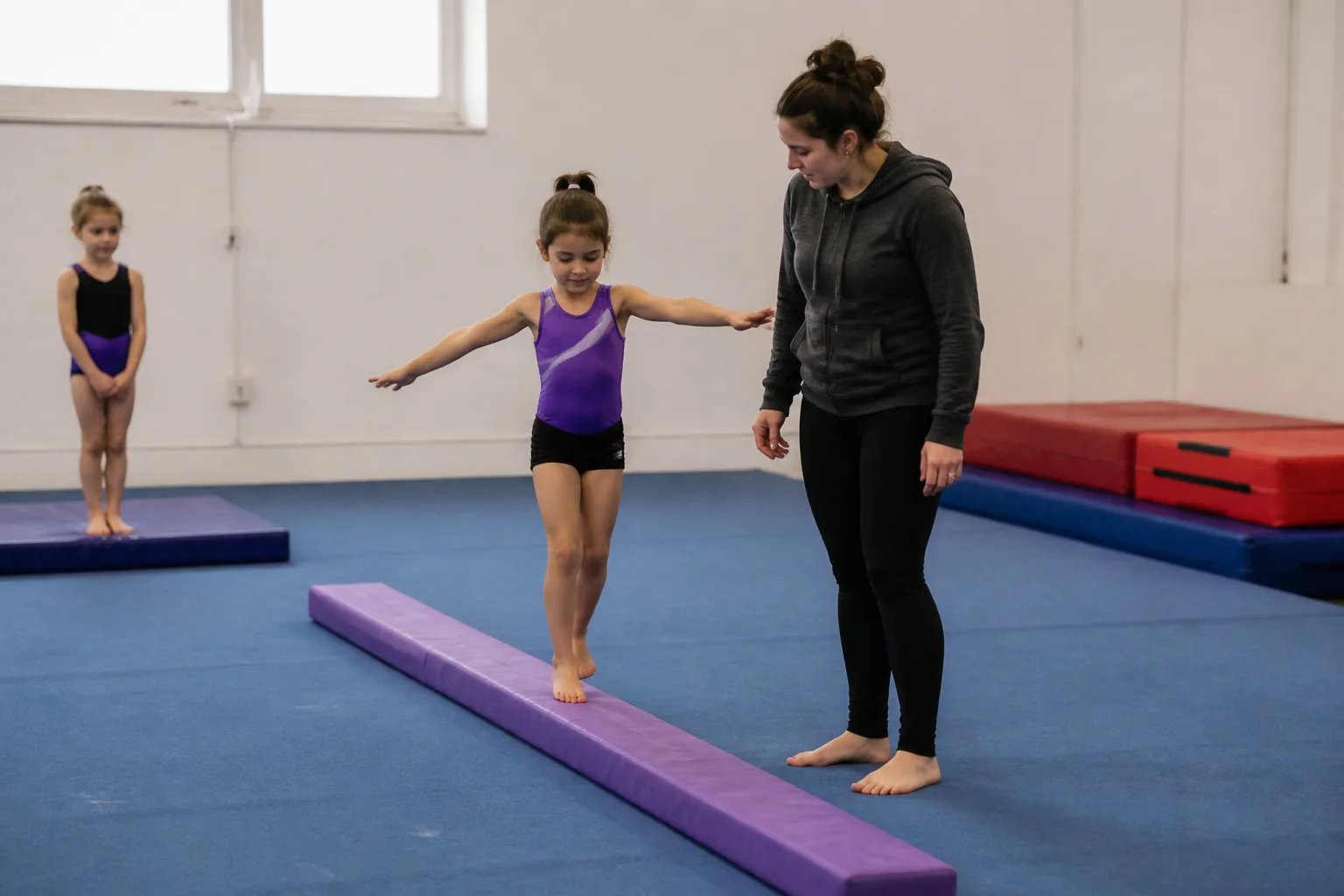
The difficult part of choosing gymnastics is working out what each class name requires from the child and adult. You'll find one club that offers a preschool class where parents stay on the floor, a recreational class using apparatus, a trampoline-specific class, and an invite-only group for advanced kids. These can all live under the same club name. To find the right fit, focus on the specifics of your child: their age, any background in movement, how they handle group settings, and a schedule your family can actually maintain.
Start with the class, not the club's highest level
A lot of clubs in the Lower Mainland run both recreational and competitive tracks. That variety is fine, but a competitive team is almost never where a beginner starts.
Flicka Gymnastics Club in North Vancouver does both recreational and competitive programs, and they've advertised an autism-friendly class for fall 2026. Their current address is 240 East 23rd Street, so check your GPS route rather than relying on an old booking or map pin. Delta Gymnastics Society in Delta offers recreational classes alongside advanced groups that require an assessment or an invitation. When you call them, don't just ask about the club; ask which specific available class is meant for a brand new child of your child's age. Also, avoid deciding what a beginner lesson looks like just by looking at photos of advanced athletes on a website.
Langley Gymnastics Foundation has recreational, preschool, inclusive, and drop-in programs at the Langley Events Centre. These are separate bookings. Check the specific group and adult-participation rules for your child instead of assuming every daytime session is open to all ages. In Maple Ridge, Celestina Popa Gymnastics offers recreational and competitive instruction for ages 2.5 to 13. Ask if they need an assessment or previous experience for their recreational groups and which one matches your child's age.
In Coquitlam, Club Aviva offers instructional, developmental, and competitive programs for both artistic and trampoline gymnastics. Over in Port Coquitlam, TAG Sports Centre provides recreational and competitive options for artistic and trampoline gymnastics too. Just a reminder: a trampoline lesson at a gymnastics club means coached instruction. It isn't the same as paying for general admission at a jump center.
Match the format to the child's stage
Preschool and parent-participation classes
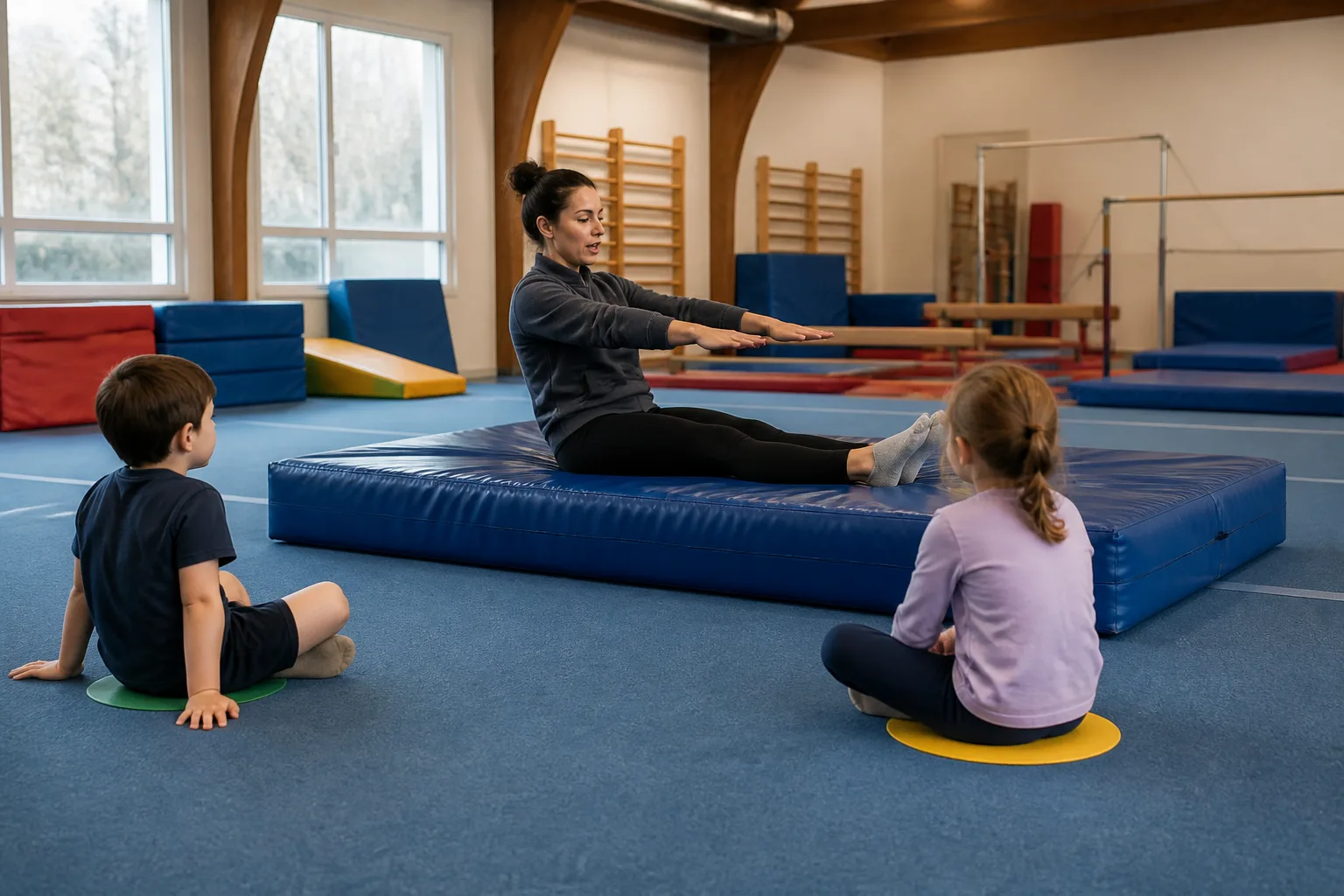
With the younger kids, find out if the adult has to stay on the floor for the whole class. You also need to know if the child needs to be toilet independent, if siblings can watch, and when the club expects kids to move into a class without a parent. The word "preschool" doesn't tell you if you're expected to be a participant or just a spectator.
If your child struggles with being away from you, ask the club how they handle a child who refuses to enter the gym without an adult. A calm, clear transition plan is way more important than forcing a kid to master a somersault before their first visit.
School-age recreational classes
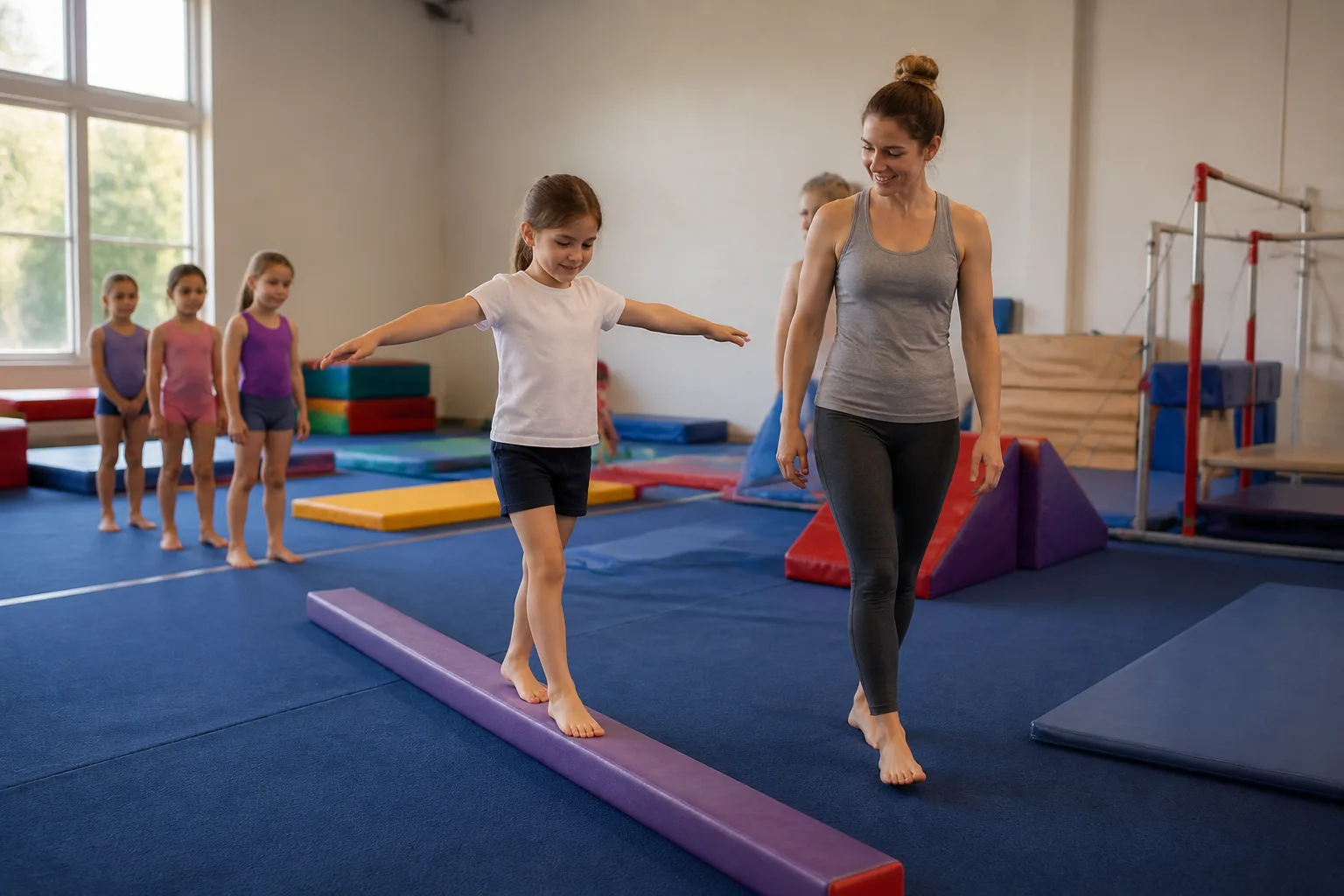
For school-age beginners, ask the coach how they manage a group where kids have different skill levels. Do they rotate through stations? How do they demonstrate moves? It is also worth asking about the coach-to-student ratio and who steps in if a child needs a break or misses a direction.
You should let the club know if your kid has done dance, parkour, trampoline, or gymnastics before, but let the coach decide the placement. Being a pro on the playground doesn't automatically mean they are ready for a specific gymnastics level.
Developmental and competitive pathways
If you think your child might want more intensive training later, ask how they move between groups. This usually involves an assessment or an invitation, and the higher levels usually mean more expensive, time-consuming commitments. You don't have to pick a long-term path before you book that first recreational class.
Ask what the advertised fee includes
Look at the total cost, not just the big number on the website. You should be asking:
- Is the fee for one class, a month, or a full session?
- Are extra charges added for club registration, insurance, or a Gymnastics BC membership?
- Does registration renew automatically?
- Are classes held on holidays or professional-development days?
- What are the policies for cancellations, withdrawals, and missed classes?
- Do they require special clothing, or is standard, close-fitting athletic wear okay?
Trials, drop-ins, or assessments can be helpful, but don't assume they are free or always available. If they do offer one, ask if it guarantees a spot in the regular class and what the total cost will be once they're enrolled.
Look closely at arrival, supervision and access
The weekly logistics will decide if a program actually works for your life. Ask where parents should wait, if you can watch, how check-in and release works, and how early you should show up. Double-check the exact facility location; a club's main office address and the actual program location aren't always the same place.
Talk about access, communication, and sensory needs before you sign up. Be specific about what works for your child: short instructions, visual demos, advance notice before transitions, a quiet waiting area, or the ability to take a pause. A club saying they are "inclusive" is just a starting point; you need to know what actual support is in the room.
What to notice in the first two classes
One class might just feel weird because it's new, so don't jump to conclusions. Watch to see if your child gets clear instructions, knows where to go, and gets enough attention without being pushed into skills they aren't ready for. You can always ask the coach how beginners progress or how they handle concerns.
By the second visit, look at the logistics. Can you actually make it on time every week? Does your child know the routine of what happens next? Are the clothing and equipment rules doable? Is the term-long commitment clear? Use the activity directory to compare nearby options, then go with the class where the teaching style, travel, and total cost all actually make sense together.