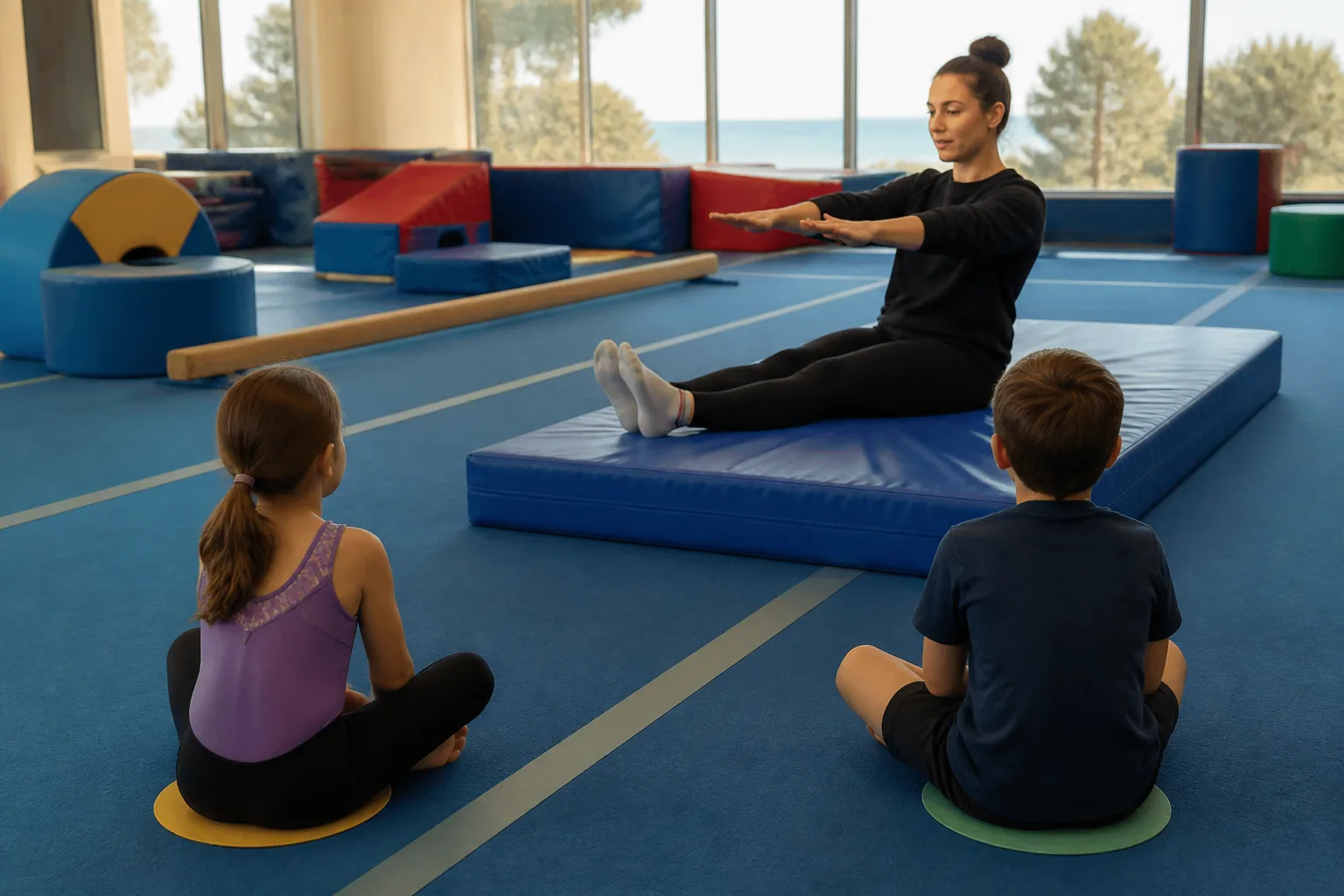
Gymnastics can mean caregiver-supported toddler play, multi-apparatus instruction or a narrowly focused session. Depending on where you look, it could mean a caregiver playing on the floor with a toddler, a school-aged kid working on multiple apparatus, a session focused entirely on trampolines, or even a high-level competitive pathway. You shouldn't assume every club registration is the same product. Instead, you should compare the actual programme unit: look at age, duration, the adult's role, the equipment used, and how the child progresses.
Parent-and-tot versus independent preschool
TAG Sports Centre makes this transition pretty clear. Their Busy Bee parent-and-tot program is for kids aged one to two and runs for 45 minutes; in this setup, the adult is right there moving and learning alongside the child. Once they hit the two-to-three age range, the Busy Bee class jumps to one hour and is independent. The four-to-five group also runs for an hour and starts introducing more advanced skills.
The difference here is about more than just a 15-minute time increase. In a parent-and-tot class, you are expected to participate. In an independent preschool class, the child is expected to enter the group, follow the instructor's lead, and then go back to the adult at pickup. You need to weigh that expectation of separation as carefully as you weigh the age requirements.
Broad recreational gymnastics versus trampoline and tumbling
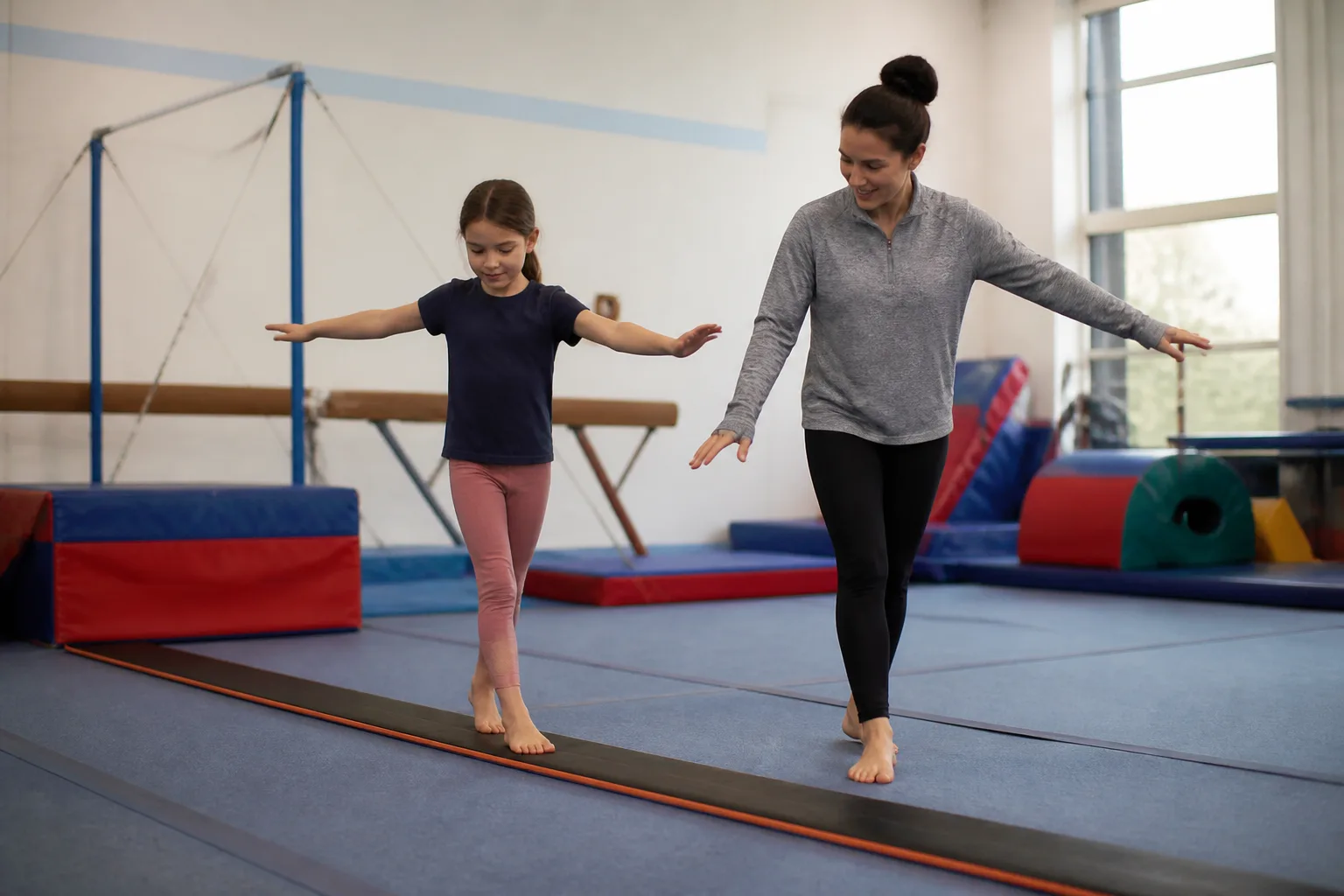
If your child wants broad exposure to the sport and a steady progression through general skills, TAG's CanGym 1–3 beginner class is a good fit. It's for ages six and up, lasts 1.5 hours, and covers the vault, bars, beam, floor, and trampoline.
On the other hand, TAG's trampoline/tumbling beginner class is only one hour long. As kids move into intermediate or advanced levels, the classes become 1.5 hours to allow for more time spent specifically on trampoline and tumbling skills. a coached trampoline class is a specific discipline; you shouldn't compare it to a general "open bounce" ticket just because they both involve trampolines or similar price points.
Recreational versus developmental or competitive
Club Aviva offers instructional, developmental, and competitive programmes for both artistic and trampoline gymnastics. Similarly, Flicka Gymnastics Club distinguishes between recreational and competitive gymnastics.
These labels are meant to describe different pathways, not a standardized level used across the whole province. You should look at how entry into these levels is decided, how many hours of training are required each week, and whether the programme includes formal assessments or events. A once-a-week recreational class and a selected competitive group are two very different things in terms of purpose and the level of instruction provided.
Structured class versus drop-in
TAG describes its drop-in sessions as unstructured gym time. It’s not a formal lesson, though coaches are around to provide spotting and guidance while kids explore at their own pace. Actual recurring classes are different; they have specific age bands, set durations, and a clear progression path.
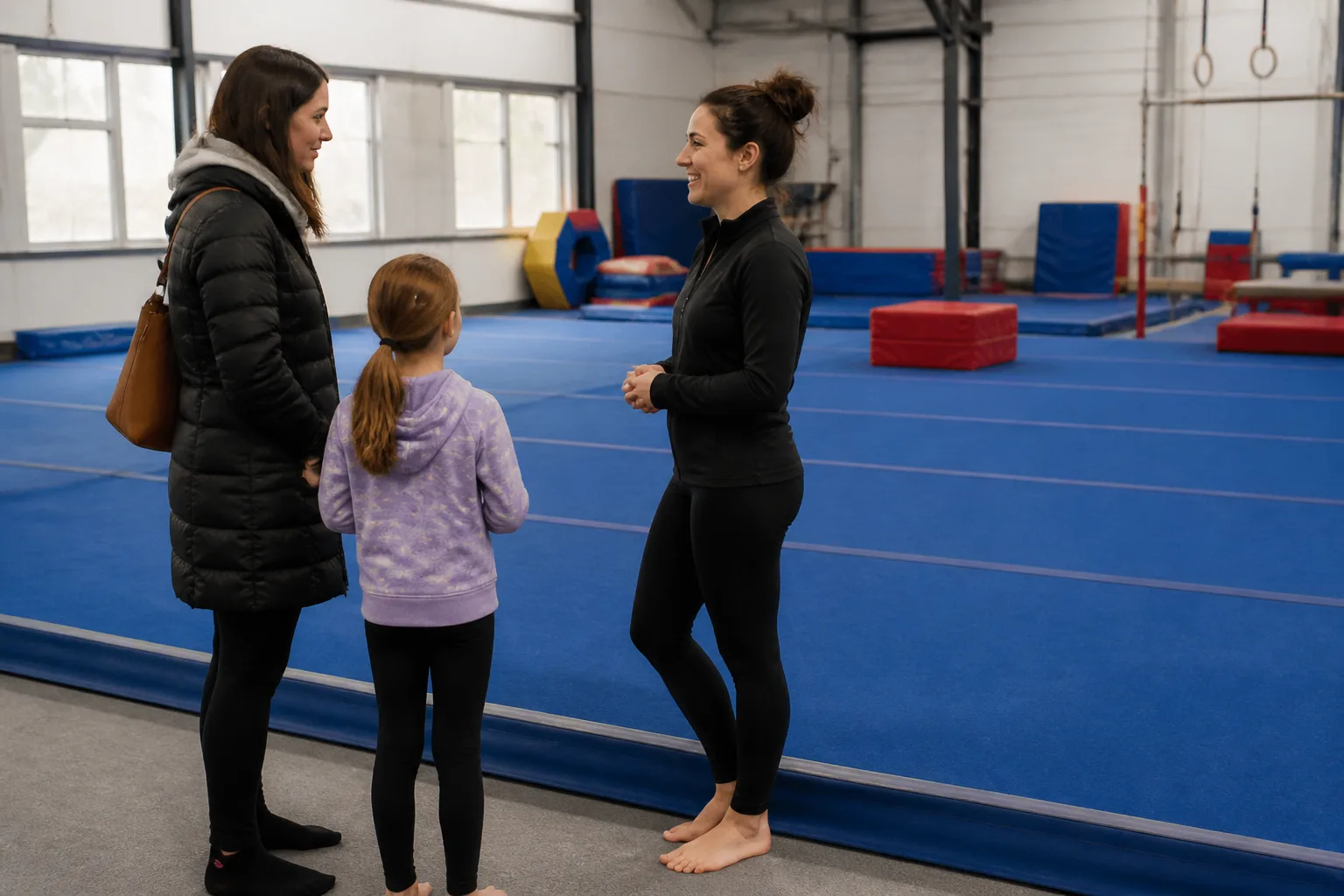
A drop-in is a great way to let a child test out a facility without committing to a full term, but you won't get a coached curriculum. Also, the current rules for the dedicated drop-in sessions are specific: you'll need to pay in cash, sign a waiver, and parents must participate during the sessions for the youngest kids.
Comparison at a glance
| Format | Published local example | Adult role | Main commitment |
|---|---|---|---|
| Parent-and-tot | TAG ages 1–2, 45 minutes | Adult participates | Short coached class with caregiver |
| Independent preschool | TAG ages 2–3 or 4–5, one hour | Child participates independently | Group routine and age-level progression |
| General recreational | TAG CanGym beginner, ages 6+, 1.5 hours | Confirm waiting policy | Several apparatus and progressive skills |
| Trampoline/tumbling | TAG beginner one hour; later 1.5 hours | Confirm waiting policy | Coached discipline-specific progression |
| Unstructured drop-in | TAG preschool/general drop-in | Parent required for youngest | Single visit; coach guidance rather than curriculum |
| Developmental/competitive | Club Aviva or Flicka pathways | Confirm waiting and observation policy | Assessment or selection and greater ongoing commitment |
Once you have a sense of which format fits your needs, look at the specifics for a local provider. You can use the Little Ones BC activity directory to check current records for various providers. Remember that price, travel, and what to pack for the first day are separate logistical decisions; this comparison is purely about what the child is actually signing up to do.