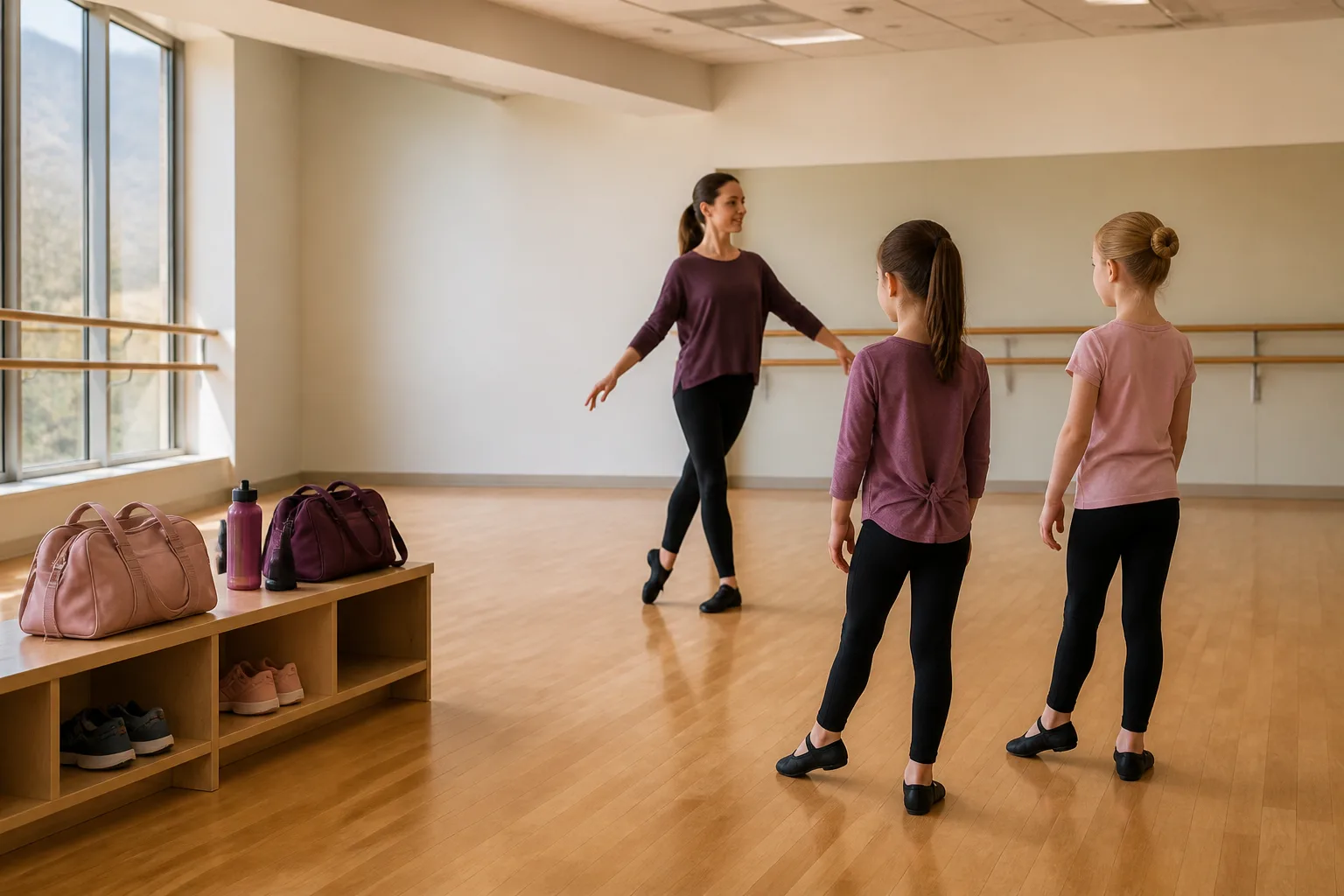
Build the checklist around the exact programme: an eight-week introduction, a school-year recreational class and an auditioned pathway have different requirements. Complete these checks against the registration you are actually buying.
Identify the commitment
Record the style, age band, weekly day and time, start and end dates, performance obligation and total payment schedule. Ask whether entry is open, requires placement or requires an audition.
Abbotsford Dance Center offers early-childhood classes from 12 months to age five, recreational routes from age five, eight-week programmes through age twelve and competitive routes by placement. Its Parent & Toddler class requires an adult to participate. Learn to Dance begins at age three and is presented without a registration fee, costume fee or long-term commitment. Those products require different calendars and preparation.
Arts Umbrella publishes packages in which students must attend all classes attached to the selection. Some routes require an audition or instructor recommendation. Check every weekly component before accepting a package place.
Prepare for the first class
Confirm:
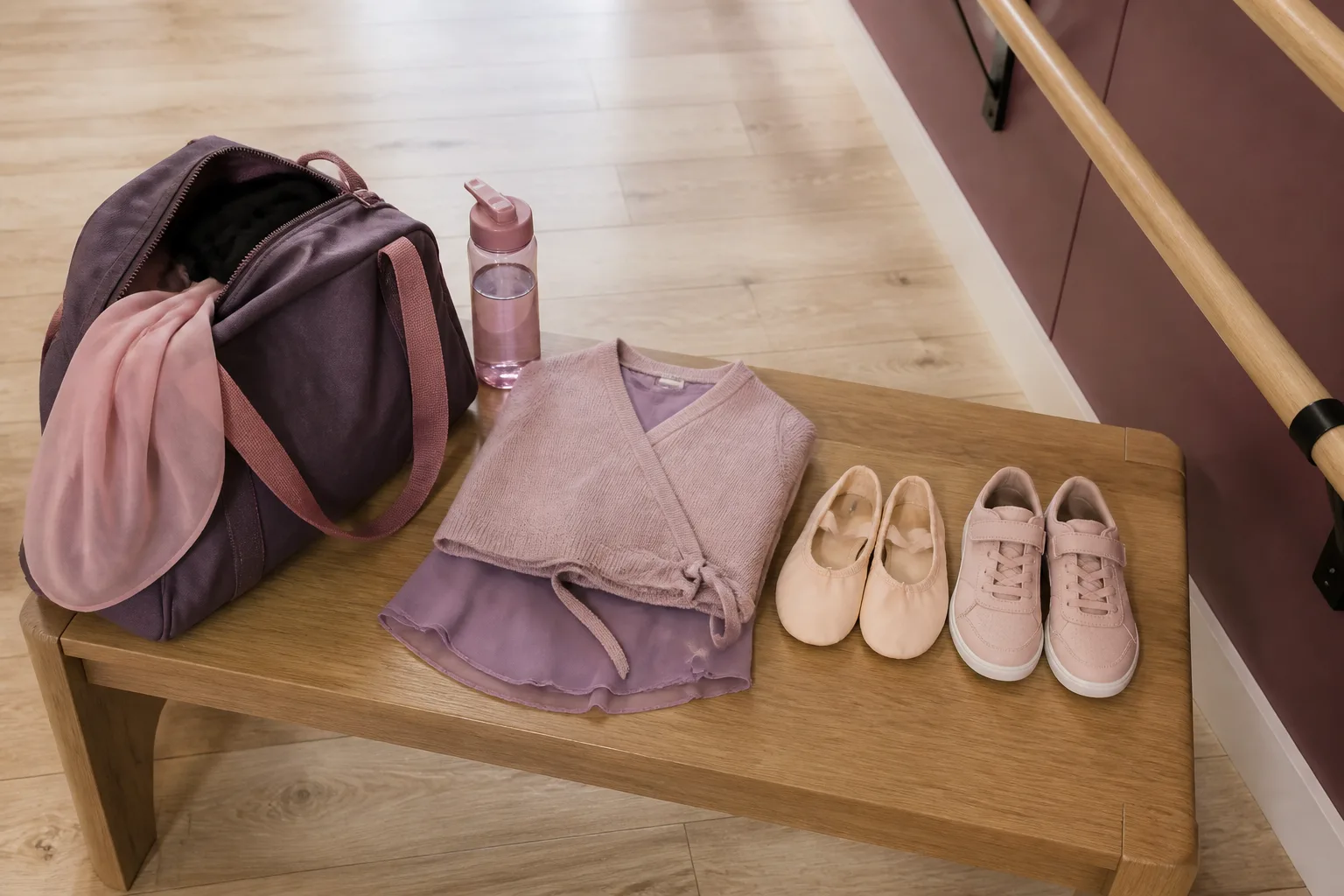
- the required clothing, shoes, hair arrangement and whether jewellery must be removed;
- whether a parent joins, watches from a designated area or leaves after check-in;
- the studio entrance, arrival time and pickup process;
- any trial, placement or audition procedure;
- whether the student needs water or other named equipment.
Do not buy a full uniform from a general style list until the studio confirms the exact class. A ballet package, hip-hop class and Parent & Toddler programme can have different requirements within the same school.
Put performance dates in the calendar
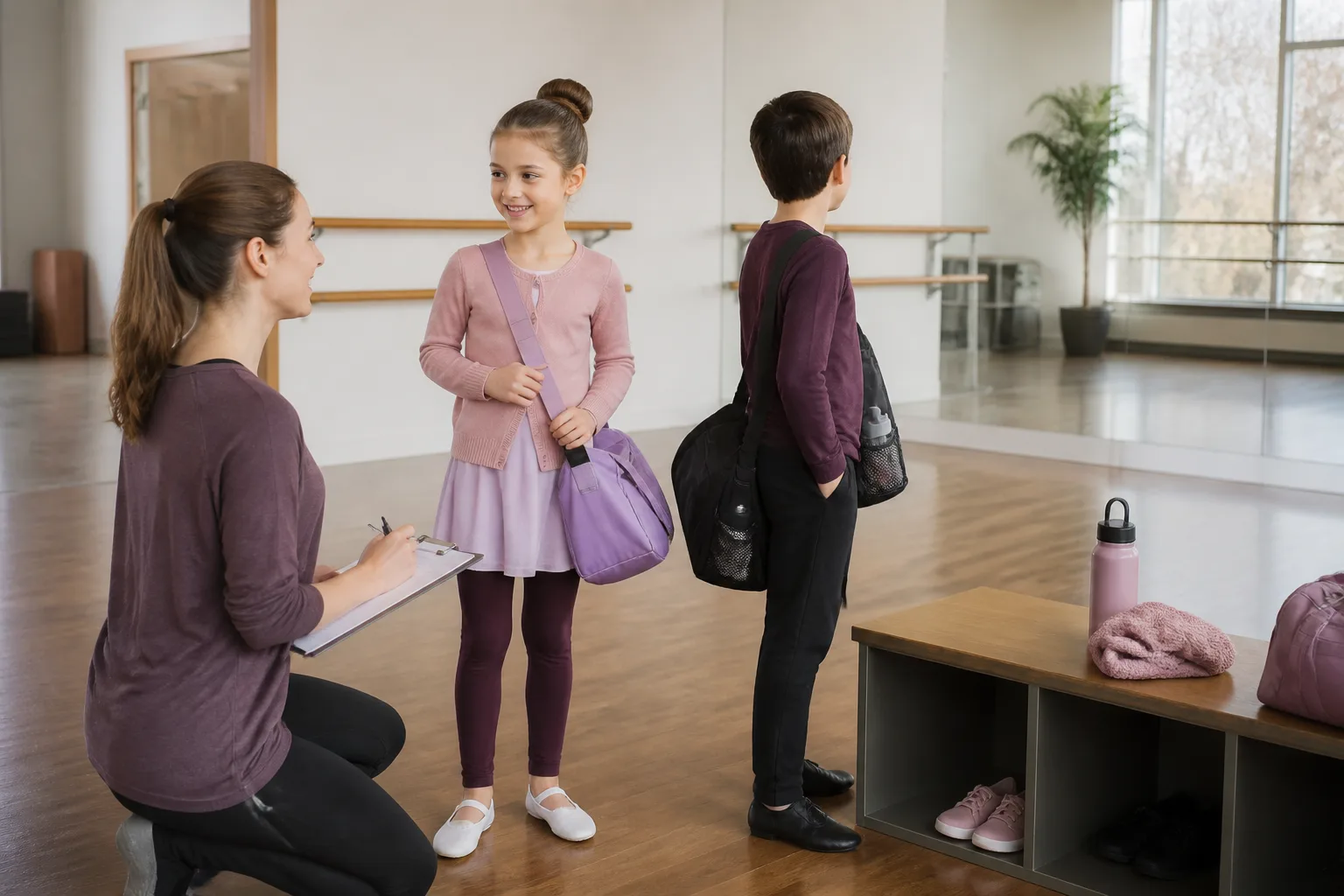
For a recital route, record rehearsal, photo and performance dates plus ticket and costume procedures. Confirm whether participation is expected and how absence affects formations. For a short introductory block, check whether it ends with a presentation or simply finishes after the last class.
Check the route within the age band
Age alone does not select the programme. Abbotsford's early-childhood category spans 12 months through age five, but Parent & Toddler requires adult participation and Learn to Dance begins at age three as an eight-week introduction. Write down the exact class title and adult role so a caregiver does not arrive expecting to watch a class they must join.
Defy Gravity publishes age and commitment paths that include 7–9, 9–11, 10–12 and 13+. Ask which route the studio recommends for the child's experience and whether a trial can occur in that exact class. The trial is useful only if it tests the schedule and level under consideration.
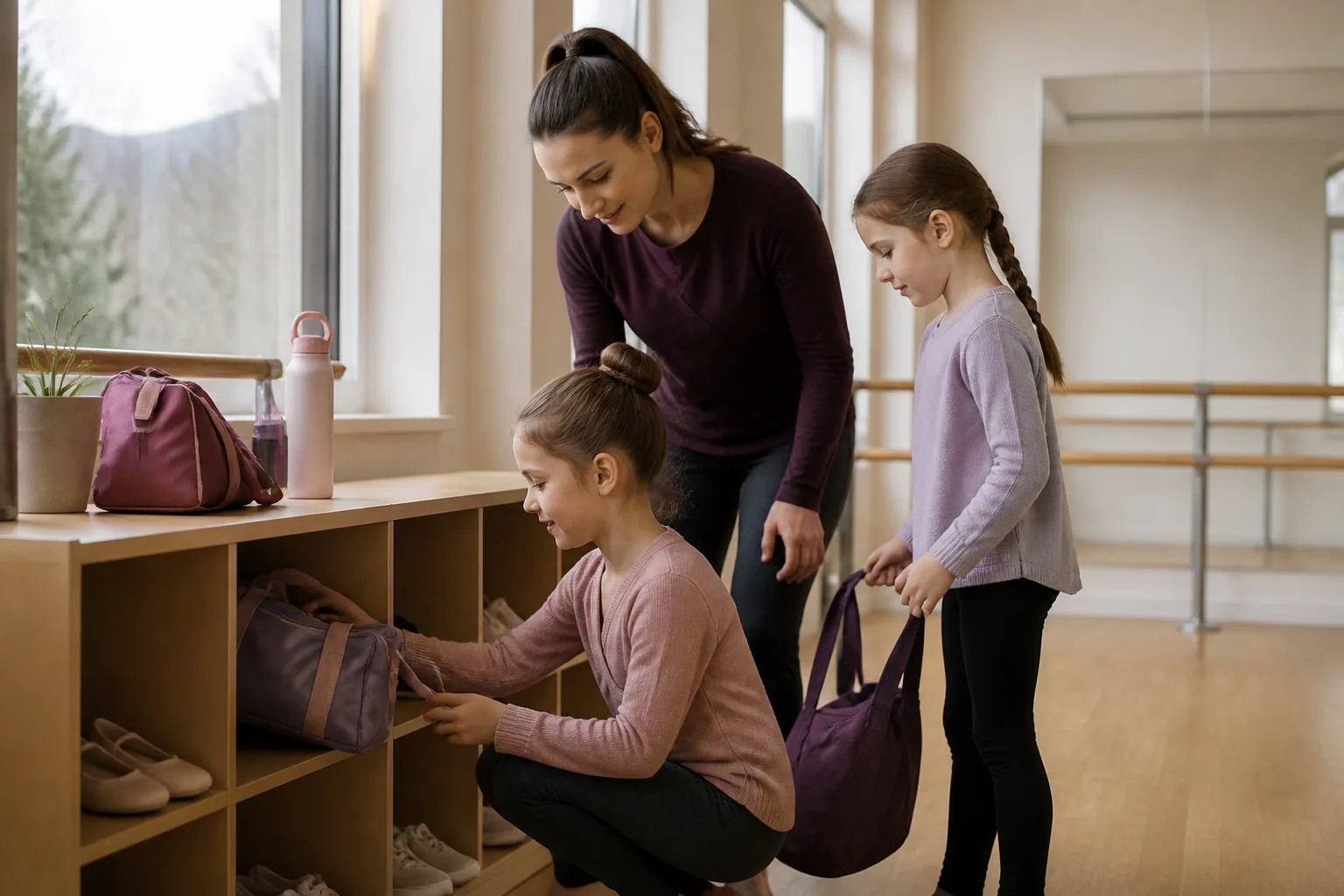
Arts Umbrella's packages can require an audition or instructor recommendation. Treat a successful placement as the start of timetable checking, rather than assuming it authorizes a single preferred class within a package.
Make pickup and production plans separate
The weekly pickup adult needs the ordinary studio time and entrance. The production calendar may involve different rehearsal and performance locations or times. Save both sets of instructions, and do not rely on the weekly class entry as the complete recital plan.
The finished checklist should show the child’s exact weekly obligation, the adult’s role and every date that extends beyond ordinary class time.