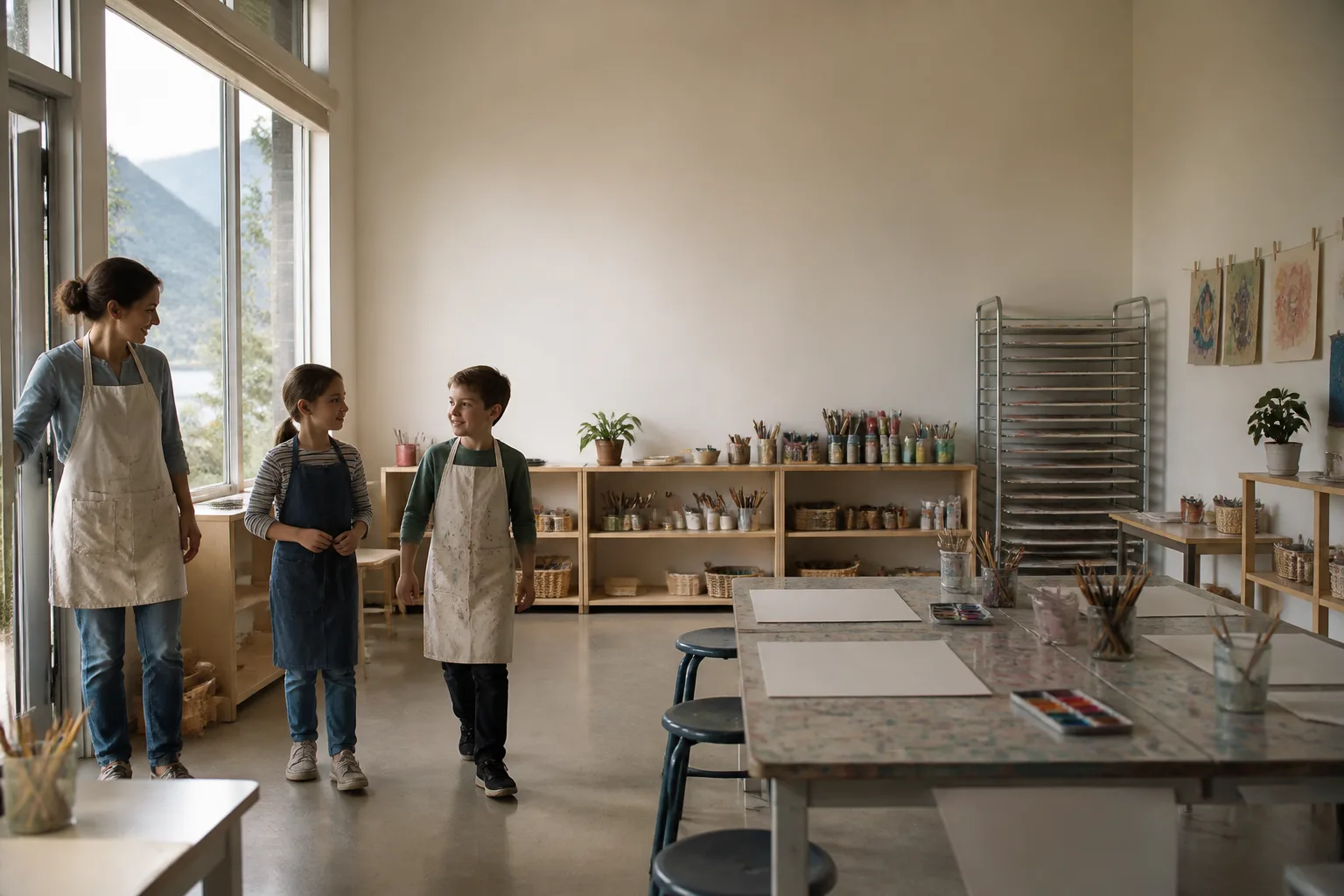
A guided painting session, a yearlong Foundation programme and a licensed art camp follow different routines. A guided painting session is designed to produce one finished image, a Foundation programme is a yearlong buildup of skills, and licensed Pro-D care is a long day that mixes art with snacks, play, and meals.
In a guided project
Amaze Arts uses a step-by-step approach to canvas painting. You can expect a walkthrough of the tools and the image, a demonstration of the sequence, and time set aside for making the art and cleaning up. If you book a party format, they usually do one hour of art followed by an hour of celebration.
Before you head out, check what medium they are using, what clothes they should wear, what materials are included, and if the child actually takes their work home that day. If your child works at a different pace, talk to the instructor beforehand to confirm how they handle pacing and if the work is collected the same day.
In a Foundation programme

Arts Umbrella runs their 2026–27 Foundation Program twice a week at Granville Island. For ages seven to eight, the yearlong Visual Arts Core is paired with five specific Explore courses. Kids aged nine to twelve get to choose a Visual or Media Arts Core plus their own electives.
The first meeting isn't about finishing a specific project; it's the start of a long-term series. The child stays in a yearlong Core while rotating through different disciplines in the Explore courses. You should ask the programme exactly how they store, discuss, and transport work between these different sessions.
In licensed Pro-D care
Creo Art Studio offers 2026–27 Pro-D days for kids aged five to twelve. They are open from 7:00 a.m. to 6:00 p.m., but art is just one part of a day that includes outdoor time, lunch, snacks, and free-choice stations.
Families need to complete a licensed-child-care registration form. You'll also need to follow their specific rules for packing food, outdoor gear, and personal items. The $95 fee covers nine hours of care; if you need care beyond those nine hours, it costs $20 per hour.

At arrival and pickup
If the arts building is large, make sure you use the exact room and entrance specified. Before class starts, give the instructor any necessary details about your child’s sensory needs, communication style, motor skills, or specific materials.
When picking up, find out what is finished, what stays at the studio, and what the child will work on next time. The first session goes well when the child understands the process and you understand what the next steps are.
Expect different commitments after the first day
An Arts Umbrella sessional class for Fall 2026 is a single 90-minute weekly slot for one specific term. Drawing Principles & Techniques (ages nine to twelve) runs on Sundays from September 27 to December 13. Video Game Design has sections for ages six-to-eight and nine-to-twelve running from September 26 to December 12. It is better to save the actual calendar and check for excluded dates than to just count the weeks.

Foundation programmes are a bigger time commitment: two meetings every week from September through June. The junior path combines Visual Arts Core with five set Explore courses, while older kids pick a Visual or Media Arts Core and their electives. The child's schedule will follow that specific programme design rather than just doing the same stand-alone project every week.
For Creo, registration ends when you pick up on your booked day. Even though the centre is open from 7:00 a.m. to 6:00 p.m., the $95 fee only covers nine hours. If your family stays for more than nine hours, you have to account for that $20 hourly extension. Also, keep in mind they have a no-refund rule; you only get a credit if a withdrawal occurs more than one week before the day.
Ask only the questions the format leaves open
For guided projects, you need to know the medium, what's included, and if the work goes home that day. For Foundation programmes, ask about the Core/elective timetable and how missed classes affect their ongoing work. For Pro-D care, confirm the packing list, the exact nine-hour calculation, and the authorized pickup rules. These details ensure you know what you're signing up for without assuming every art programme is the same.
If you're booking a workshop, check if there is a follow-up session. If it is a yearlong or term programme, make sure you know the expectations for attendance, home practice, and withdrawals. For licensed care, stick to the provider's specific procedures for authorized pickup and their rules regarding credit and deadlines.