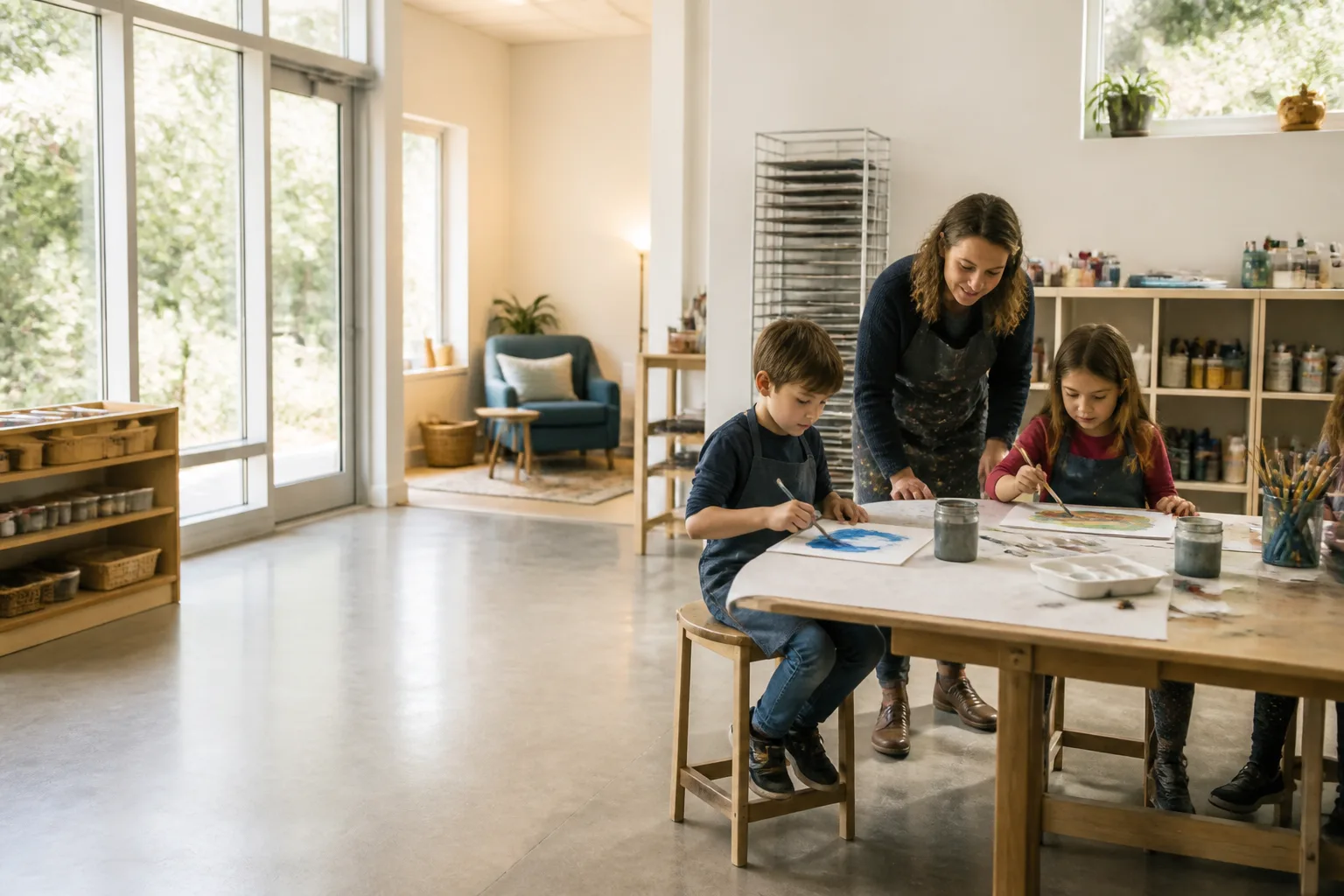
A friendly website photo and a small class size do not show whether a studio can support this child in the room. To figure out if a space really works, you have to skip the marketing fluff and ask specific questions about the actual experience of participating. Look past the polished ads and start asking about the room layout, the specific materials they use, the pace of the lessons, and how the staff handles the actual flow of the class.
Define what “beginner-friendly” means
"Beginner-friendly" is a pretty vague term that means different things to different people. For some kids, it might mean they need a step-by-step demonstration for every single part of the project. For others, it might mean they need the freedom to mess around with materials or the reassurance that making mistakes isn't a big deal.
You should find out if everyone in the class follows one single project, if kids get to choose from different prompts, or if they work on their own. It is also worth knowing what happens if a child works slower than the rest of the group, finishes their work early, or decides mid-way through that they want to change their plan entirely.
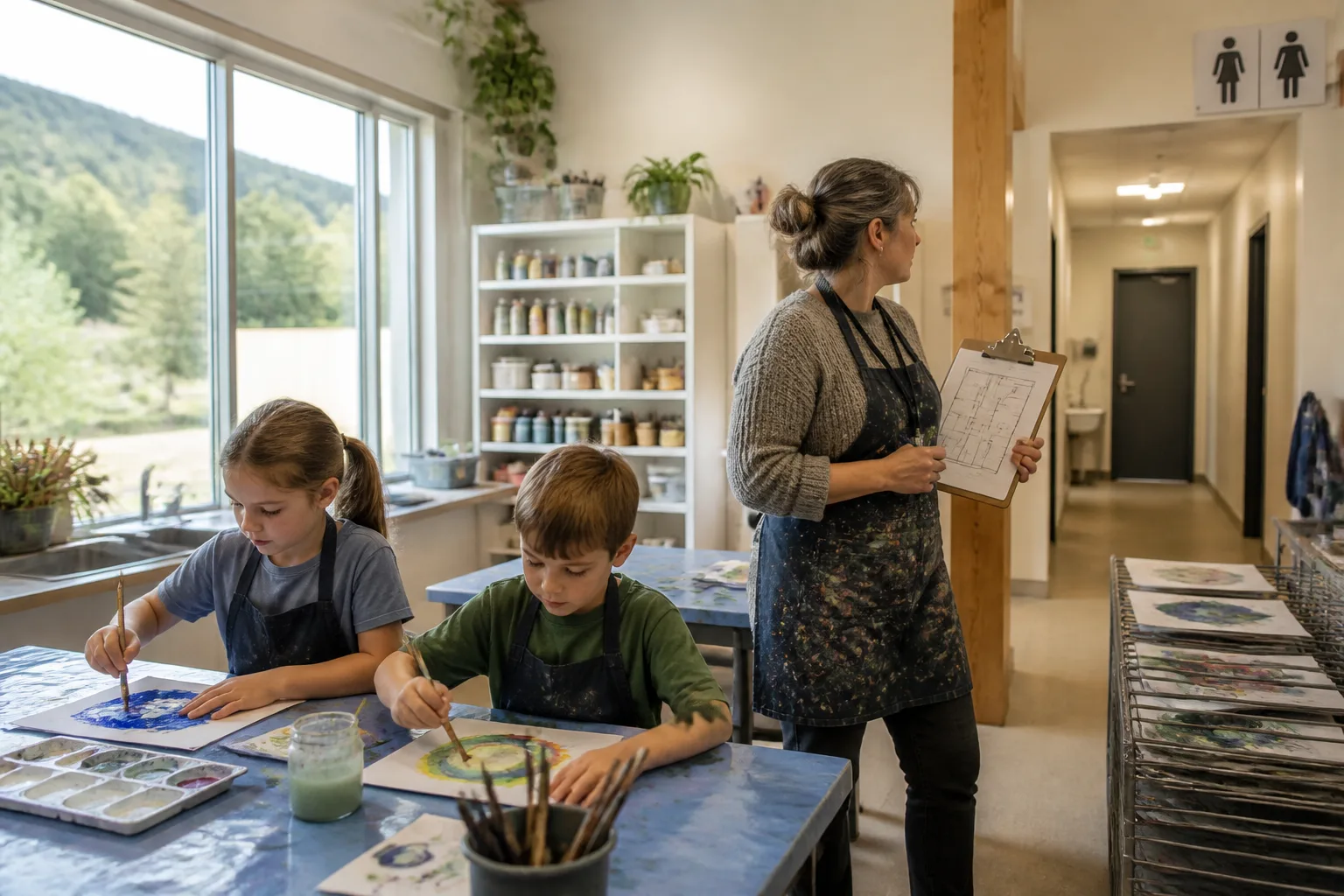
Art Village Visual Art School in Langley offers programs designed for specific ages and developmental stages. Creo Art Studio in White Rock has classes and camps, including licensed Pro-D care with studio stations and time outdoors. For the longer days, access includes the outdoor route and lunch area, not just an art table. Arts Umbrella offers art and design through a broader Vancouver arts program. These are solid places to start your research, but make sure to double-check the specific class and location you want.
Ask about physical access
Getting through the front door is only half the battle. You need to know if a child can actually work comfortably once they are inside the room. Ask these specific questions:
- Is the path from the entrance to the classroom step-free?
- What is the situation with table heights and seating options?
- Is there an accessible washroom nearby?
- Can mobility equipment stay right next to the child while they work?
- How do they manage heavy materials, water, and the cleanup process?
- Is an adult allowed to step in and assist if you have agreed on that beforehand?
If the class involves moving between different rooms, going outside, or visiting a kiln space, make sure you ask about those specific routes too. Building access is one thing, but being able to actually sit and work at a table is what matters.

Ask about sensory conditions
Art is a very sensory-heavy experience. Materials can have strong smells, sticky textures, dust, or unexpected sounds. Ask the instructor what media they plan to use, how the room is ventilated, and if things like gloves or alternative tools are allowed. You should also ask if music is played in the room and how loud the cleanup process gets.
Check if there is a designated quiet space where a child can go for a break, and find out if they can rejoin the class without missing important instructions. If your child needs to know what is coming next to feel comfortable, ask how families receive the project plan in advance so you can prepare for any changes in materials.
Clarify individual support
Think about what kind of support would actually make a difference for your child. This might look like receiving one instruction at a time, having a visual sample to look at, using an adapted grip, needing more time to process instructions, or needing a predictable workspace.

Ask the provider what an instructor can realistically handle while they are busy supervising the rest of the group. If your child needs one-to-one assistance, ask if the program provides it, if they allow a support person to join them, or if they simply aren't able to accommodate that level of care. Don't just assume the staffing ratio is high because the advertised class size is small.
Try a manageable format
If you aren't ready to commit long-term, try a single workshop or a short block of classes first. This gives you a chance to see the environment and the teaching style before you sign up for a full term. Before you go, check if it is a drop-off session or if an adult is required to stay, and see if there are specific materials you need to bring yourself.
Once the session is over, look at the process rather than just the art piece they made. Ask yourself: Could the child follow the instructions, make their own choices, use the materials, and take a break when they needed to? Those are the details that actually tell you if a program is truly accessible, regardless of what the label says.