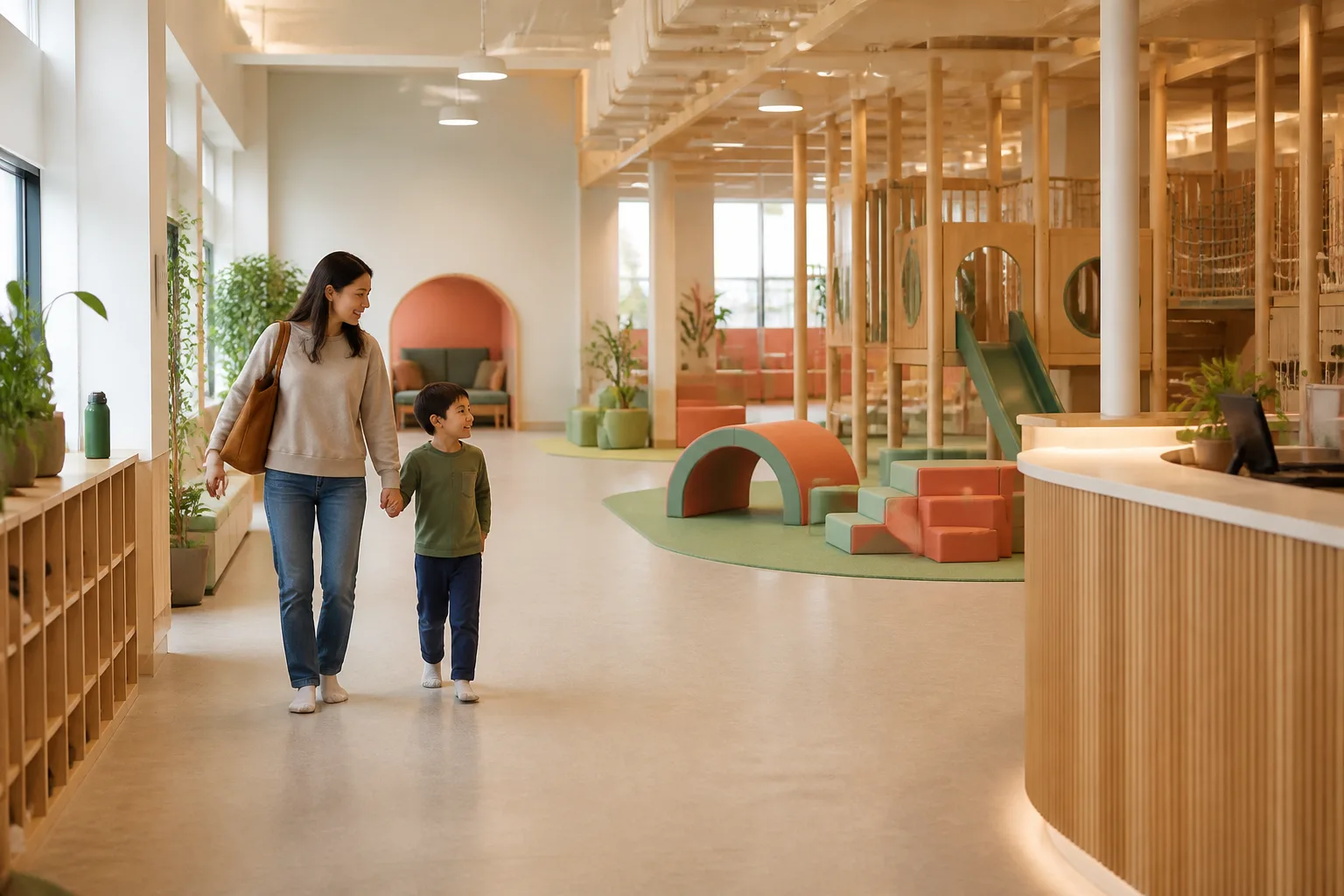
An accessible entrance does not tell you whether a child can reach the play floor, use the equipment or take a quiet break. It doesn't mean every child can actually use the playground. Before you pack up and head out, you need to know if your child can actually get into the building, move through the space, join the play, and find a quiet place to rest. Instead of just asking a venue if they are "accessible," you should ask about the specific path from the front door all the way to the actual play area.
Start with the child's usable experience
When you call, give the venue very specific details: your child's age, how they move, how they communicate, and any sensory needs they have. If you ask general questions, you'll likely get general answers. It is better to ask if a mobility aid can reach the washroom or seating areas, or if you are allowed to step into the play structure to help. Check if there is a low-level area your child can use without needing to climb, and ask if your family can step away from the play space and come back later during the same session.
HANABABY WORLD in New Westminster has indoor play, parent-child activities, and a party room. INNOPLAY in North Vancouver offers different supervision formats, and Play Abby has several Lower Mainland locations (you'll need to select the specific branch). These are decent places to start your research, but do not assume any of them are actually accessible for your specific child without getting a direct "yes" from the staff.
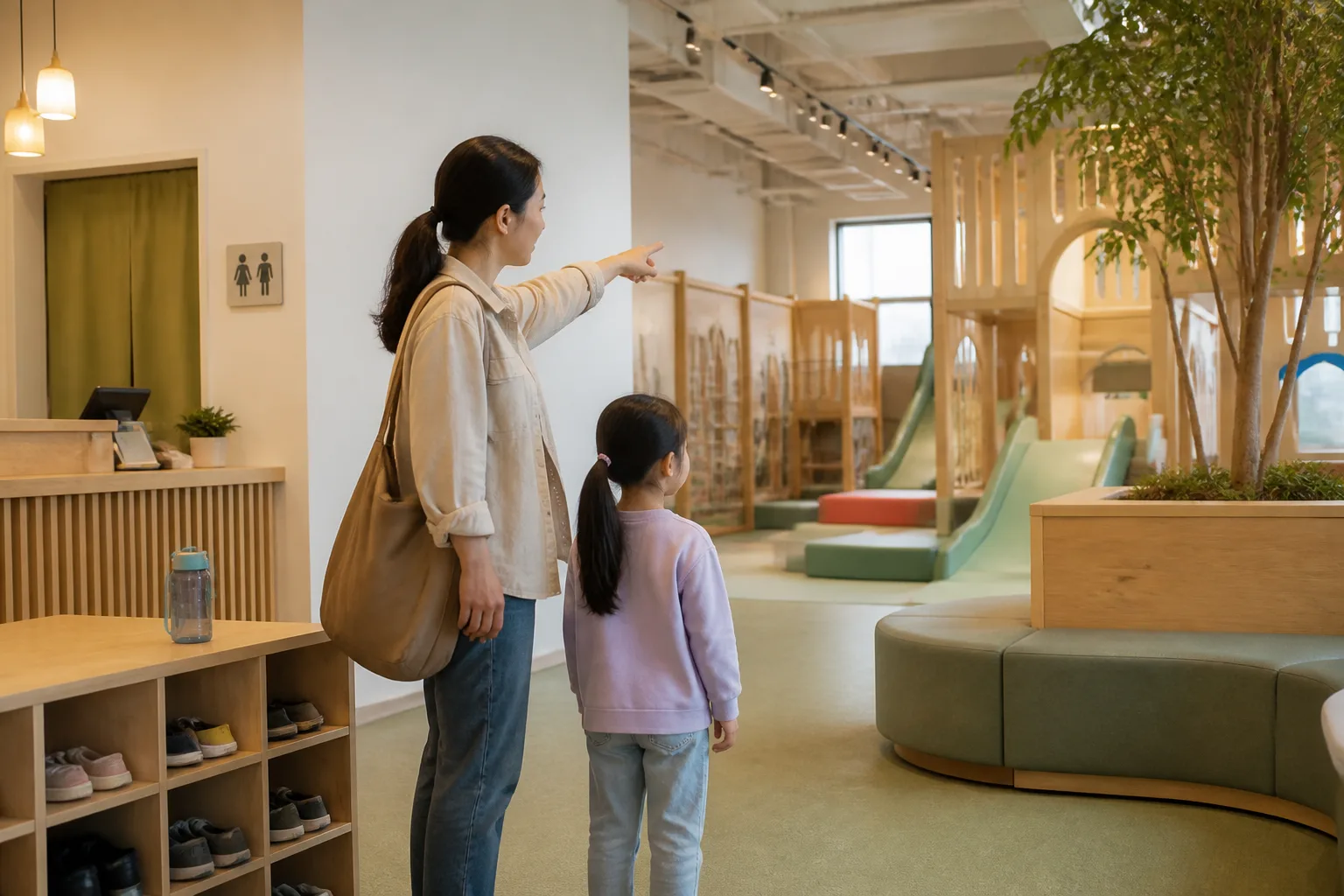
Ask about the physical route
- Are there steps, narrow gates, or areas where you have to change shoes between the entrance and the play floor?
- Is there an elevator, and is it actually running during your scheduled session?
- Can you keep strollers or mobility aids nearby?
- Is there accessible seating that gives you a clear view of the play area?
- Which washroom is the accessible one, and is the change table suitable for your child?
- Are the pickup procedures and emergency exits workable for your family?
A venue might have an accessible public area even if the main climbing structure is totally off-limits to anyone who can't manage tight spaces, tunnels, or steps. Ask specifically which equipment is reachable from the floor level.
Check noise, lighting and breaks
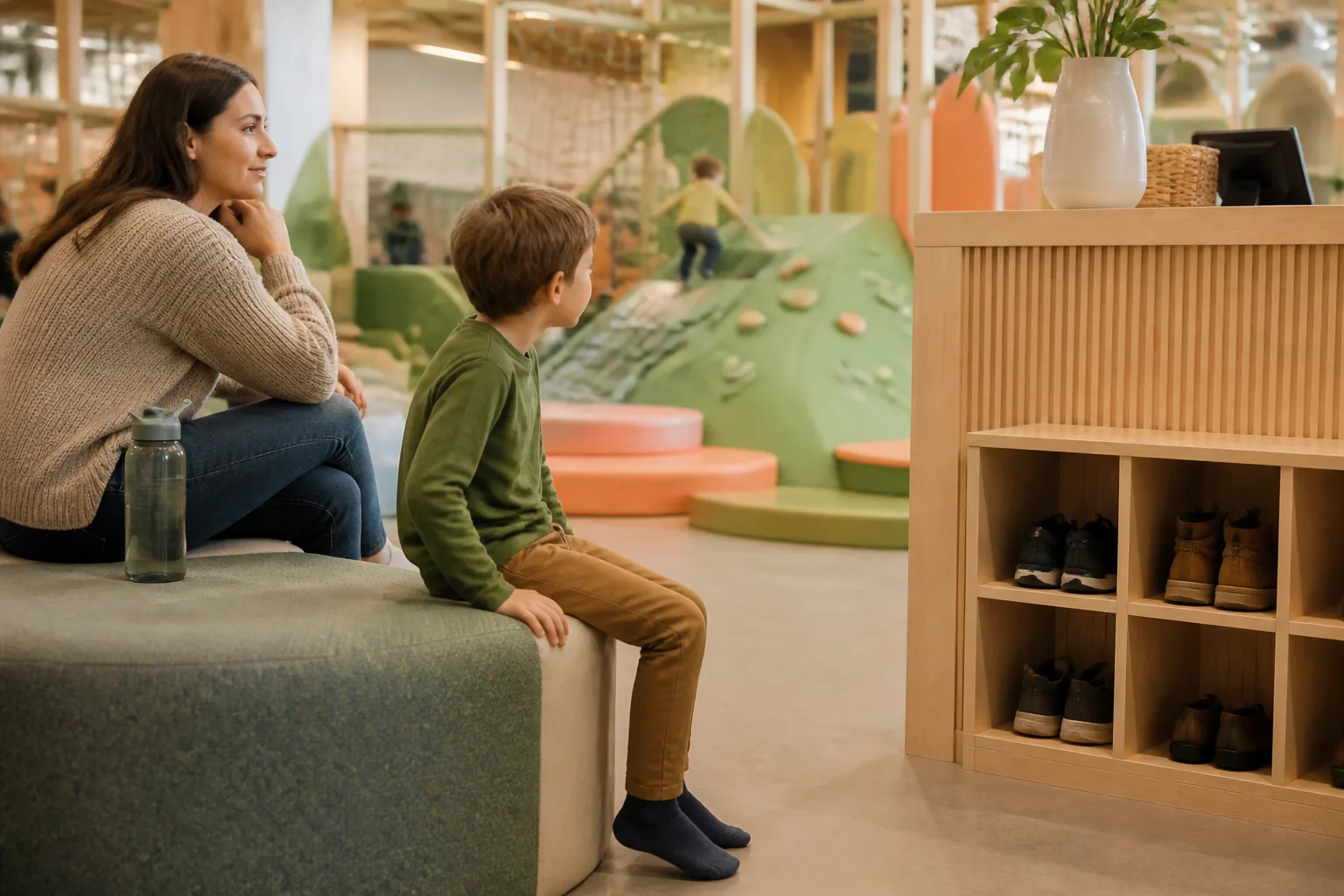
Don't assume a weekday visit will be quiet; ask when the venue is typically less busy and if there are school groups or parties sharing the floor while you are there.
Check how a break works before you pay. INNOPLAY excludes re-entry from ordinary drop-in admission, so leaving the building and returning is not the same as pausing in its seating area. A child who needs an outdoor break may need a different booking arrangement or a different venue altogether. Confirm the equivalent rules at any branch you choose. If your child uses visual supports, hearing protection, or other familiar aids, confirm they are allowed on the play floor and ask where they can be stored safely when they aren't being used.
Clarify supervision
You need to know who is responsible for the child during your specific booking. Staff members who monitor equipment or enforce rules are not the same as people providing a supervised drop-off programme. Ask if an adult is allowed to follow their child everywhere they are permitted to play. If the venue offers a supervised or drop-off program, ask about the age limits, how the staff handles the area, and their procedures for contacting caregivers, toileting, and medication.
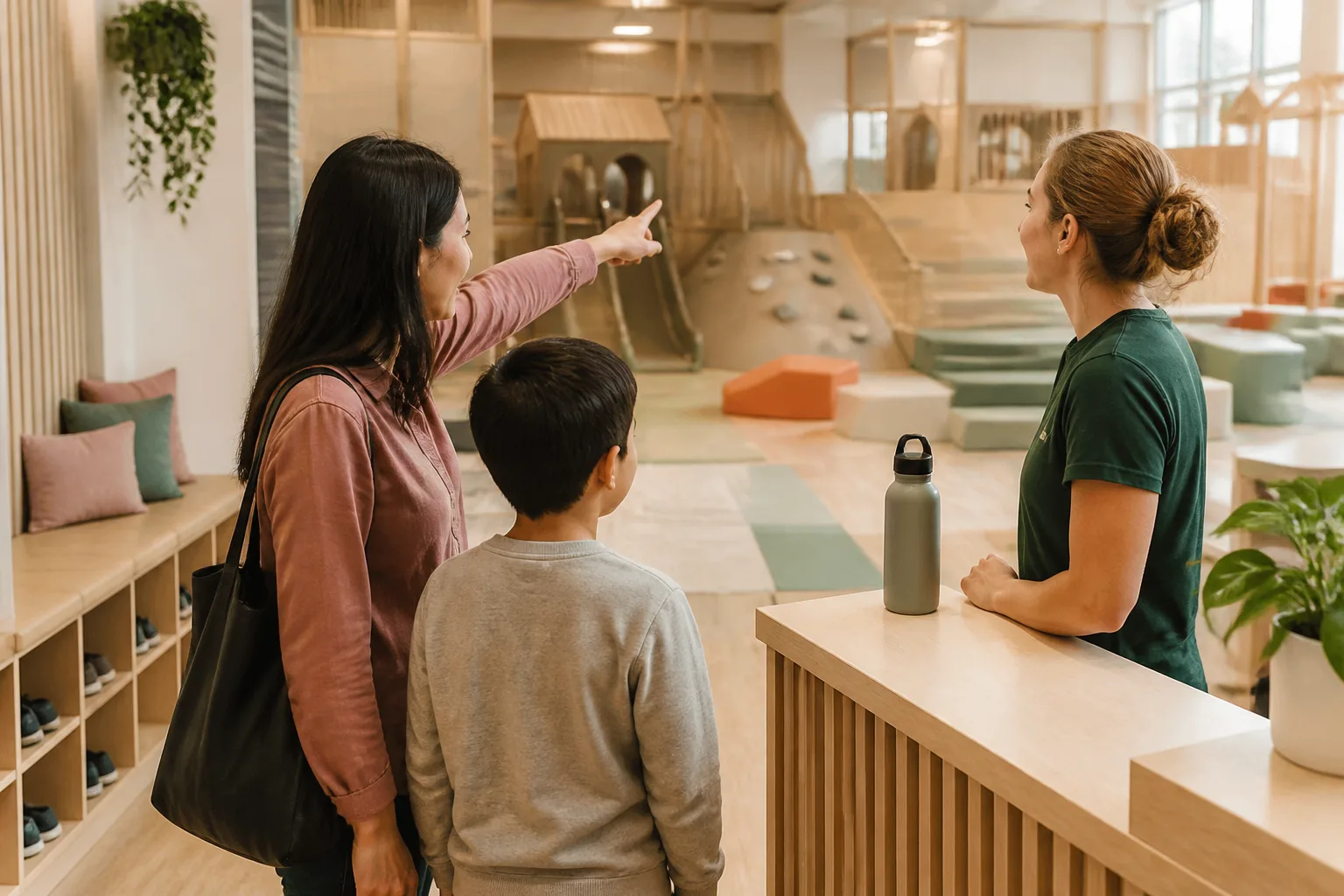
If you have siblings, remember that one adult might have to support children in different zones at once. Ask about sightlines and if you need to buy an extra ticket for an additional adult. A layout that works for one child might be much harder to navigate with a mixed-age group.
Plan a low-pressure first visit
Pick a short, normal session before you spend money on a pass or plan a big party. Check the rules on food, booking times, socks, and re-entry ahead of time. Walk your child through what the arrival and shoe storage process will look like, and agree on a signal they can use if they need to take a break.
Once you have visited, write down what actually happened. Take note of the entrance, the equipment they could actually use, the noise levels, how easy it was for an adult to get to them, and how much recovery time they needed. That information will be much more useful for your next comparison than a generic "accessible" label.